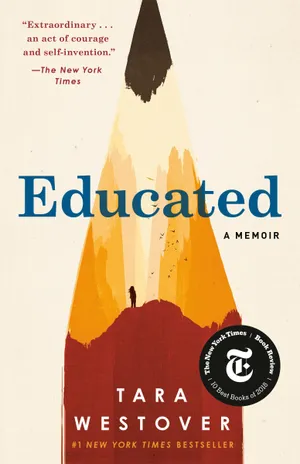
Our Review
Tara Westover did not set foot in a classroom until she was seventeen. She grew up in the mountains of Idaho in a survivalist Mormon family controlled by a paranoid, possibly bipolar father who believed the federal government was Satanic, that public education was brainwashing, and that the end of the world was imminent. Her mother, a midwife and herbalist, deferred to her husband in all things. Her older brother Shawn was violent and abusive, and the family's collective response was to pretend it was not happening.
Somehow, improbably, Westover educated herself well enough to pass the ACT, gained admission to Brigham Young University, and eventually earned a PhD from Cambridge. But the memoir is not a straightforward triumph narrative. What makes Educated devastating is the price Westover pays for knowledge. Every step toward education is a step away from her family. Every fact she learns contradicts what she was raised to believe. She does not just acquire knowledge — she has to dismantle an entire reality and build a new one from scratch, while the people she loves most call her a liar, a traitor, and a tool of the devil.
Westover writes with startling clarity about the machinery of gaslighting — how a family can collectively rewrite history in real time and make the person who remembers the truth feel insane. This is a book about education in the deepest sense: not grades or degrees, but the agonizing process of learning to trust your own mind.
Why This Book Earned Its Place in the Top 100
Educated earns its spot because it redefines what "education" means. This is not a memoir about going to school. It is a memoir about what happens when a human mind, denied access to the world, claws its way toward understanding — and discovers that the cost of knowing is the loss of everything familiar.
Westover's story is extreme, but the underlying dynamic is not. Anyone who has outgrown their family of origin, who has learned something that made it impossible to go back to who they used to be, will recognize the central agony of this book: the moment when growth and loyalty become incompatible.
The memoir is also a vital document about fundamentalism, domestic abuse, and the way charismatic patriarchs can hold entire families captive through ideology and fear. Westover does not demonize her parents. She renders them with painful complexity — a father who is both loving and monstrous, a mother who is both talented and complicit. That refusal to simplify is what makes the book literature rather than mere testimony.
Finally, the writing itself is superb. Westover's prose has the precision of a scholar and the immediacy of a born storyteller. For a woman who did not read a book until her teens, she writes with an authority that puts most memoirists to shame.
Who Should Read This Book
- •Anyone who values education — this book will make you appreciate the access to knowledge you may take for granted.
- •Readers who grew up in controlling or fundamentalist environments — Westover's story is both validating and cathartic.
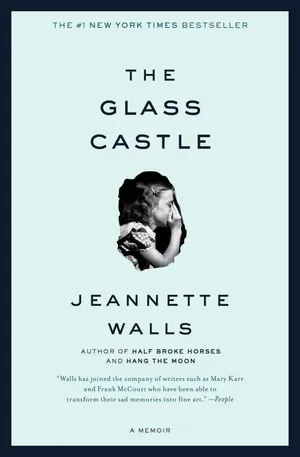
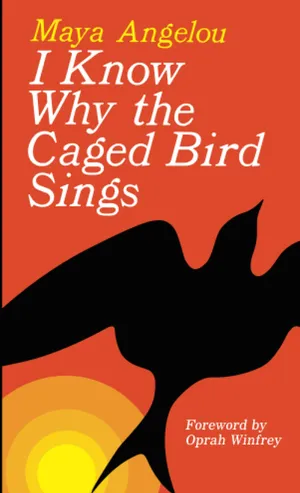
- •Fans of memoir — Educated is among the finest memoirs of the twenty-first century, standing alongside The Glass Castle and I Know Why the Caged Bird Sings.
- •People interested in the psychology of family systems — the gaslighting and reality-revision Westover describes are textbook examples rendered with devastating specificity.
- •Anyone looking for an inspiring but honest story — Westover refuses to reduce her life to a simple triumph narrative, and the book is better for it.
Key Themes and Takeaways
- Education as self-creation
- For Westover, education is not the acquisition of credentials but the radical act of building an identity independent of her family's mythology.
- Gaslighting and the rewriting of reality
- The memoir is one of the most precise accounts ever written of how a family collectively denies abuse and makes the victim doubt their own memory.
- Fundamentalism and isolation
- Westover's father uses religion and survivalism to keep his family cut off from the world, creating a closed system impervious to outside correction.
- The cost of breaking free
- Every step Westover takes toward independence is also a step toward estrangement from the family she loves, and the book refuses to pretend that price is small.
- Memory and truth
- Westover is scrupulously honest about the unreliability of her own recollections, using footnotes to mark where her memory differs from her siblings' accounts.
Cultural and Historical Impact
Published in 2018, Educated debuted at number one on the New York Times bestseller list and remained on the list for over two years. It has sold over 8 million copies worldwide and been translated into 45 languages. The book was a selection of numerous high-profile book clubs, including those of Bill Gates and Barack Obama. It won the Goodreads Choice Award for Memoir and was a finalist for numerous other awards. Film rights were acquired, with plans for a major motion picture adaptation. Educated became one of the defining memoirs of its decade, sparking conversations about educational access, religious extremism, and the nature of family loyalty. It made Westover, a woman who once had no formal education, one of the most prominent authors in America.
Notable Quotes
“You can love someone and still choose to say goodbye to them. You can miss a person every day, and still be glad that they are no longer in your life.”
“The decisions I made after that moment were not the decisions of a girl who would have made the choice that would have been best for herself, but the decisions of a lunatic.”
“Everything I had worked for, all my years of study, had been to give me this one privilege: to see and experience more truths than those given to me by my father.”
If You Loved Educated, Read These Next
Ready to read Educated?
Random House · 352 pages
Buy Educated on Amazon