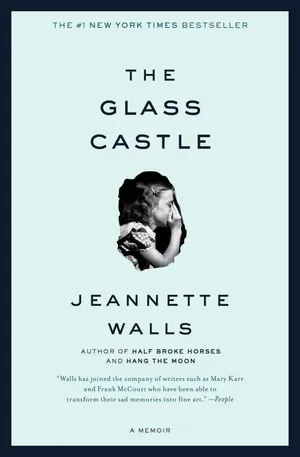
Our Review
The Glass Castle opens with a scene that tells you everything: Jeannette Walls, now a successful New York journalist, is riding in a taxi when she spots her mother rooting through a dumpster on the street. The shame, the love, the impossibility of reconciling these two realities — that is the entire memoir in miniature.
Walls grew up in a family that was, depending on your perspective, either adventurous or catastrophically neglectful. Her father Rex was a charismatic genius-drunk who could explain physics and the stars but could not hold a job or stop drinking long enough to feed his children. Her mother Rose Mary was an artist who believed children should raise themselves and who once told her starving kids that suffering built character. The family moved constantly — Arizona, Nevada, West Virginia — always one step ahead of bill collectors, always restarting in some new dusty town where Rex would promise to build the glass castle: a solar-powered dream house he had designed on paper and would never construct.
What makes the memoir extraordinary is Walls's tone. She is neither bitter nor sentimental. She tells the story straight, presenting the chaos, the hunger, the danger, and the genuine moments of wonder and love with the same clear-eyed directness. Her parents were terrible and magnificent, often in the same sentence. Walls refuses to flatten them into villains because the truth is more complicated than that — and the truth is what this book is about.
Why This Book Earned Its Place in the Top 100
The Glass Castle belongs on this list because it is one of the most honest memoirs ever written about the dysfunction of family love. Walls does something most memoirists cannot: she holds two contradictory truths in the same hand. Her parents failed her in ways that were sometimes dangerous and always painful. Her parents also gave her a wildness, a resilience, and a sense of wonder that made her who she is. She does not choose between these truths. She tells both.
The book is also a class document of extraordinary power. Walls grew up in poverty so severe that she ate from trash cans and went without heat in Appalachian winters. Her journey from that life to the gossip columns of New York City is remarkable, but what makes it literature is that she never pretends it was easy, clean, or complete. She carried her family with her — their beauty and their damage — and the book is the proof.
Few memoirs land with the emotional force of The Glass Castle's final pages. By the time you finish, you understand something deep and uncomfortable about love: that it can coexist with neglect, that gratitude can coexist with rage, and that some parents give their children both wings and wounds in the very same gesture.
Who Should Read This Book
- •Anyone who has complicated feelings about their family — Walls models a way of telling the truth about dysfunctional parents without reducing them to caricature.
- •Fans of memoir — this is consistently ranked among the finest memoirs of the twenty-first century, and the reputation is earned.
- •Readers interested in poverty in America — the depictions of hunger, homelessness, and Appalachian destitution are among the most vivid in contemporary nonfiction.
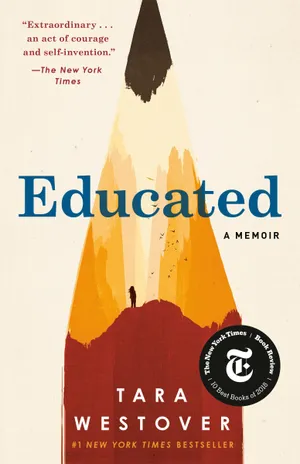
- •People who loved Educated — both books deal with extraordinary childhoods, parental extremism, and the painful process of self-liberation.
- •Book clubs — the moral complexity of the Walls parents generates conversations that last long after the last page.
Key Themes and Takeaways
- The impossibility of simple judgment
- Walls refuses to categorize her parents as purely good or purely evil, insisting that love and negligence can inhabit the same person simultaneously.
- Poverty and resilience
- The family's destitution is rendered without self-pity, and the children's resourcefulness under impossible conditions is both heartbreaking and awe-inspiring.
- The myth of the dream
- The glass castle Rex promises to build becomes a symbol of all the beautiful things dysfunctional parents promise and never deliver.
- Self-invention and escape
- Walls and her siblings each find their own way out, and the memoir tracks the different costs each one pays for freedom.
- Shame and acceptance
- The memoir begins and ends with Walls confronting her shame about her parents and learning to replace it with something more complicated and more generous.
Cultural and Historical Impact
Published in 2005, The Glass Castle spent over seven years on the New York Times bestseller list, selling more than 4 million copies. It was adapted into a 2017 film starring Brie Larson and Woody Harrelson. The book became one of the most widely assigned memoirs in American high school and university curricula, particularly in creative writing and sociology courses. It helped launch a wave of "dysfunctional family" memoirs in the 2000s and 2010s, though few matched its tonal achievement. Walls became a prominent speaker on resilience, poverty, and the complexity of family love. The memoir's success enabled her to leave journalism and write full-time, and it remains one of the defining nonfiction books of the twenty-first century.
Notable Quotes
“One benefit of Summer was that each day we had more light to read by.”
“You should never hate anyone, even your worst enemies. Everyone has something good about them. You have to find the redeeming quality and love the person for that.”
“Things usually work out in the end. What if they don't? That just means you haven't come to the end yet.”
If You Loved The Glass Castle, Read These Next
Ready to read The Glass Castle?
Scribner · 288 pages
Buy The Glass Castle on Amazon