Our Review
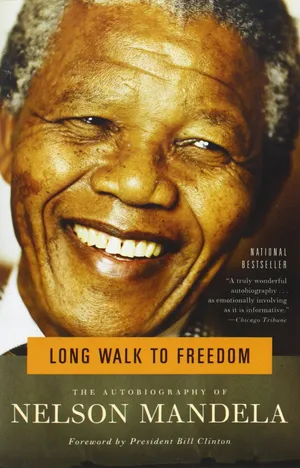
Long Walk to Freedom is the autobiography of a man who spent twenty-seven years in prison and emerged to lead his country. Nelson Mandela began writing it secretly on Robben Island, smuggling pages out in the covers of other prisoners' notebooks. The finished book, published in 1994, traces his journey from a rural Transkei childhood through his legal career, his radicalization against apartheid, his years of armed resistance, his long imprisonment, and finally his release and election as South Africa's first Black president.
What distinguishes this memoir from ordinary political autobiography is Mandela's refusal to mythologize himself. He writes frankly about his failures as a husband and father, his early naivety, and the agonizing compromises he made in pursuit of liberation. He does not pretend that twenty-seven years in prison were anything but devastating. But he also refuses bitterness. The passages about his imprisonment are marked by a discipline of spirit that is almost incomprehensible — he describes studying his guards, learning Afrikaans to communicate with them, and eventually understanding that the freedom of the oppressor is as important as the freedom of the oppressed.
The prose is clear and direct, without literary flourishes. Mandela writes the way he spoke — with measured dignity and occasional dry humor. It is the voice of a man who understands that leadership is not performance but service, and that the long walk to freedom is exactly what it sounds like: long, exhausting, and worth every step.
Why This Book Earned Its Place in the Top 100
Long Walk to Freedom belongs on this list because it is the definitive account of one of the 20th century's most important moral struggles, told by the person at its center. The anti-apartheid movement produced many heroes, but Mandela's story is singular because it encompasses the full arc — from youthful idealism through armed resistance, decades of imprisonment, and finally the almost miraculous transition to democracy without civil war.
The book also earns its place as a study in what leadership actually requires. Mandela's willingness to negotiate with his captors, to forgive people who had stolen decades of his life, and to prioritize national reconciliation over personal vengeance contradicted every expectation. Reading about these choices in his own words — understanding the strategic calculation and genuine moral conviction that went into them — is an education in what it means to lead under impossible circumstances. In a world that often confuses leadership with charisma, Mandela's memoir is a reminder that true leadership is about sacrifice, patience, and the long view.
Who Should Read This Book
- •Anyone interested in leadership — Mandela's combination of strategic thinking, moral courage, and personal sacrifice is one of the most instructive examples in modern history.
- •Readers who want to understand South Africa — this is the essential first-person account of apartheid and the struggle to dismantle it.
- •People going through prolonged adversity — Mandela's ability to maintain purpose and dignity through twenty-seven years of imprisonment is a profound source of strength.
- •Students of political history — the book offers an inside view of how one of the 20th century's most successful liberation movements actually worked.
- •Anyone who believes in the possibility of forgiveness and reconciliation — Mandela's example is the most powerful modern argument that enemies can become partners.
Key Themes and Takeaways
- Freedom and sacrifice
- True freedom is not free; it demands a willingness to give up personal comfort, safety, and decades of your life.
- Forgiveness and reconciliation
- Mandela's decision to pursue reconciliation rather than revenge after his release was a political strategy and a moral conviction.
- The evolution of a leader
- The book traces Mandela's growth from a headstrong young activist into a patient, strategic statesman.
- The machinery of oppression
- Apartheid is depicted not as abstract evil but as a system of specific laws, institutions, and daily humiliations.
- Resistance and endurance
- Twenty-seven years of imprisonment test Mandela's commitment to his cause and reveal the inner resources required to survive without surrendering principles.
Cultural and Historical Impact
Long Walk to Freedom was published in 1994, the same year Mandela was inaugurated as South Africa's first Black president. It has sold millions of copies worldwide and been translated into dozens of languages. The book was adapted into a feature film in 2013, starring Idris Elba. Mandela was awarded the Nobel Peace Prize in 1993 (shared with F.W. de Klerk), and his autobiography became the defining narrative of the post-apartheid era. The book influenced a generation of political leaders and activists worldwide. Barack Obama has cited Mandela as one of his most important political inspirations. Mandela's memoir is regularly assigned in political science, history, and leadership courses globally. His phrase "long walk to freedom" has become a universal metaphor for the struggle against injustice.
Notable Quotes
“I learned that courage was not the absence of fear, but the triumph over it. The brave man is not he who does not feel afraid, but he who conquers that fear.”
“For to be free is not merely to cast off one's chains, but to live in a way that respects and enhances the freedom of others.”
“No one is born hating another person because of the color of his skin, or his background, or his religion. People must learn to hate, and if they can learn to hate, they can be taught to love, for love comes more naturally to the human heart than its opposite.”
If You Loved Long Walk to Freedom, Read These Next
Ready to read Long Walk to Freedom?
Back Bay Books · 656 pages
Buy Long Walk to Freedom on Amazon