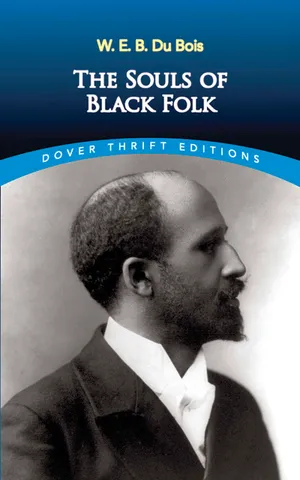
Our Review
Published in 1903, The Souls of Black Folk is a book that sees the future. W.E.B. Du Bois — the first African American to earn a doctorate from Harvard — opens with a prophecy that proved terrifyingly accurate: "The problem of the twentieth century is the problem of the color line." He then proceeds, across fourteen essays that blend history, sociology, autobiography, and lyrical prose, to describe the inner life of Black Americans with a depth and precision that no previous writer had achieved.
Du Bois's central concept — "double consciousness," the sense of always looking at oneself through the eyes of a contemptuous white world — remains one of the most cited and debated ideas in American intellectual history. It captures something that statistics and policy papers cannot: the psychological toll of living in a society that refuses to see you as fully human. Du Bois describes this not as an abstract theory but as a lived experience, drawing on his own life growing up in Great Barrington, Massachusetts, and his years teaching in the rural South.
The book also contains a devastating critique of Booker T. Washington's accommodationist approach to racial progress, arguing that accepting second-class citizenship in exchange for economic opportunity was a Faustian bargain. Du Bois insisted on full political and civil rights, higher education, and the cultivation of Black intellectual and artistic life. That argument shaped the founding of the NAACP and the direction of the civil rights movement for the next century.
Why This Book Earned Its Place in the Top 100
The Souls of Black Folk is on this list because it is the single most important book about race ever written by an American. Du Bois did not merely describe the Black experience — he created the intellectual framework through which that experience has been understood for over a century. "Double consciousness," "the veil," "the color line" — these are not just phrases from a book. They are the foundational concepts of an entire field of study.
The book also matters because it is beautifully written. Du Bois was a scholar, but he was also an artist, and The Souls of Black Folk achieves a lyrical intensity — particularly in the final essay, "Of the Sorrow Songs," about the spirituals — that places it among the finest prose works in American literature. It demands to be read not just for its arguments but for its sentences. In a country that has never fully reckoned with its racial history, Du Bois's voice remains essential — not because it is comfortable, but because it refuses to let the reader look away.
Who Should Read This Book
- •Every American — this book illuminates the foundational contradiction of a nation built on freedom and slavery, and its analysis remains startlingly relevant.
- •Students of history, sociology, or African American studies — The Souls of Black Folk is the cornerstone text of the field and indispensable for understanding the 20th century.
- •Readers who want to understand systemic racism at a deeper level — Du Bois goes beyond statistics to reveal the psychological and spiritual dimensions of racial oppression.
- •Anyone interested in beautiful nonfiction prose — Du Bois writes with a literary power that elevates sociology into art.
Key Themes and Takeaways
- Double consciousness
- Black Americans experience a divided self — seeing themselves both through their own eyes and through the contemptuous eyes of white society.
- The color line
- Du Bois prophesied that the central problem of the 20th century would be the division of humanity along racial lines.
- Education and uplift
- Du Bois argues for the highest possible education for Black Americans, rejecting the idea that vocational training alone could secure equality.
- The veil
- A metaphor for the invisible barrier separating Black and white Americans, which distorts perception on both sides.
- The sorrow songs
- The spirituals created by enslaved people are not just music but the most profound artistic expression America has produced.
- Political versus economic strategies
- Du Bois critiques Booker T. Washington's accommodation, arguing that political rights and intellectual development cannot be sacrificed for economic gain.
Cultural and Historical Impact
The Souls of Black Folk was published in 1903 and has never gone out of print. It was instrumental in the founding of the Niagara Movement in 1905 and the NAACP in 1909, both of which Du Bois helped lead. The book directly influenced virtually every major African American intellectual of the 20th century, including James Weldon Johnson, Langston Hughes, Richard Wright, James Baldwin, and Toni Morrison. Martin Luther King Jr. called Du Bois "a tireless explorer and a gifted discoverer of social truths." The concept of double consciousness has become one of the most widely cited ideas in American sociology and cultural criticism. The book has been translated into more than a dozen languages and is consistently ranked among the most important works of nonfiction in American history. In 1998, the Modern Library ranked it among the top ten nonfiction books of the 20th century.
Notable Quotes
“The problem of the twentieth century is the problem of the color line.”
“It is a peculiar sensation, this double-consciousness, this sense of always looking at one's self through the eyes of others.”
“Herein lies the tragedy of the age: not that men are poor — all men know something of poverty; not that men are wicked — who is good? Not that men are ignorant — what is Truth? Nay, but that men know so little of men.”
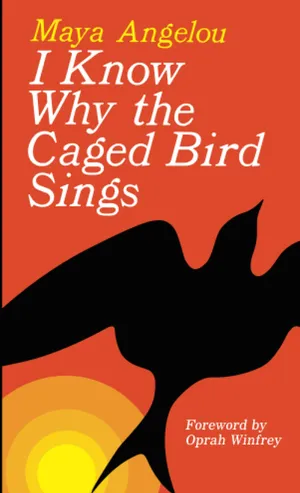
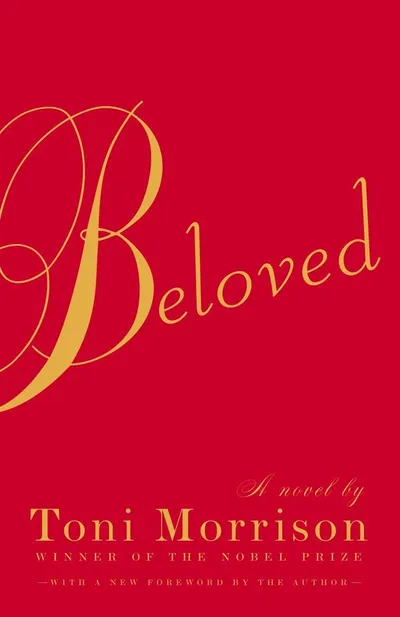
If You Loved The Souls of Black Folk, Read These Next


Ready to read The Souls of Black Folk?
Dover Publications · 176 pages
Buy The Souls of Black Folk on Amazon