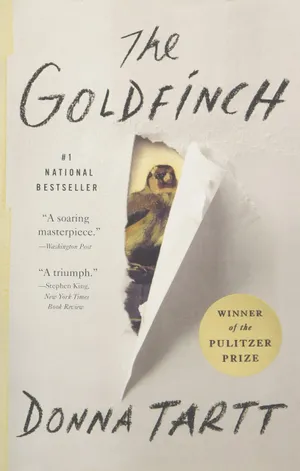
Our Review
Theo Decker is thirteen years old when a terrorist bombing at the Metropolitan Museum of Art kills his mother and, in the smoke and confusion, he walks out carrying a tiny 17th-century Dutch painting — Carel Fabritius's "The Goldfinch." That stolen masterpiece becomes the secret center of his life for the next fourteen years, as Theo pinballs from the Upper East Side to Las Vegas to Amsterdam, accumulating grief, addiction, bad decisions, and an achingly human need to hold onto one beautiful thing in a world that keeps taking everything else away.
Donna Tartt spent eleven years writing this novel, and the time shows. The Goldfinch is vast — 771 pages — and deliberately paced, with the Dickensian ambition to follow a single life from catastrophe through every stage of its aftermath. The cast is extraordinary: Hobie, the gentle antiques restorer who becomes Theo's surrogate father; Boris, the charismatic, amoral Ukrainian kid who becomes his best friend and worst influence; and the Barbour family, whose WASP propriety masks its own fractures.
Tartt writes about grief with the precision of someone who understands that loss doesn't resolve — it just changes shape over time. The novel's final pages offer a meditation on art, beauty, and survival that is as close to philosophy as fiction gets, and it earns every word of it.
Why This Book Earned Its Place in the Top 100
The Goldfinch is that rare contemporary novel written with the scope and ambition of a 19th-century masterwork. Tartt deliberately chose to write against the grain of modern literary minimalism — her sentences are long, her chapters are longer, and her belief in plot, character, and emotional engagement is unapologetic. In an era when literary fiction often feels afraid of bigness, The Goldfinch insists on it.
The novel earns its spot through the sheer depth of its engagement with what art means and why it matters. Theo's relationship with the painting is not a plot device — it's the novel's central argument. Can a beautiful object save a damaged life? Can the experience of looking at something perfect justify the suffering required to reach that moment? Tartt doesn't offer easy answers, but her final pages — a sustained, breathtaking meditation on beauty and impermanence — are among the most powerful in contemporary fiction.
The Goldfinch also proved that literary fiction could still be a genuine cultural event. In a fragmented media landscape, millions of readers committed to a 771-page novel and talked about it for years.
Who Should Read This Book
- •Readers who love immersive, long novels — if you want to disappear into a book for a week, this is one of the finest options available.
- •Anyone interested in art, antiques, or the art world — Tartt's research is impeccable, and the novel's depiction of the antiques trade is both vivid and fascinating.
- •People who have experienced significant loss — Tartt writes about grief with a depth and honesty that many readers find genuinely healing.
- •Fans of Dickensian storytelling — the orphan protagonist, the colorful cast, the sprawling plot all echo the 19th-century tradition in the best possible way.
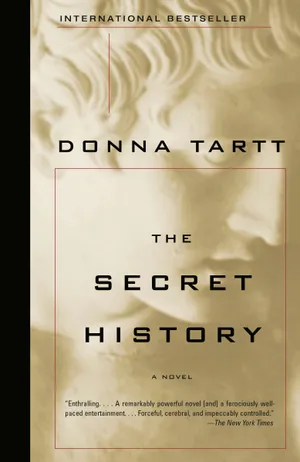
- •Anyone who loved The Secret History and wants to see what Tartt does with more space — this is the fuller, more mature expression of her extraordinary talent.
Key Themes and Takeaways
- Grief and its aftermath
- Theo's loss of his mother is not an event but a condition — the novel tracks how it shapes every relationship and decision for over a decade.
- The redemptive power of art
- The painting becomes a lifeline, and the novel asks whether beauty can genuinely save us or only console us.
- Fate versus free will
- A single moment of chaos — the bombing — sets the entire plot in motion, raising questions about whether Theo's life was determined by that instant.
- Authenticity and forgery
- Theo's involvement in the antiques world blurs the line between real and fake, mirroring his own performed normalcy.
- Addiction and self-destruction
- Theo's drug use and reckless behavior are portrayed not as moral failures but as logical responses to unprocessed trauma.
- Found family
- Hobie, Boris, and the Barbours each offer Theo different versions of the family he lost, none complete but all genuine.
Cultural and Historical Impact
Published in 2013, The Goldfinch won the 2014 Pulitzer Prize for Fiction, making Donna Tartt only the third woman in a decade to receive the award. The novel debuted at #1 on the New York Times bestseller list and has sold millions of copies in over 30 languages. It spent over 30 weeks on the bestseller list and reignited debate about the relationship between literary fiction and popular storytelling after a mixed critical reception that included both rapturous praise and sharp dismissals. A 2019 film adaptation starred Ansel Elgort and Nicole Kidman. The real painting by Carel Fabritius, housed at the Mauritshuis in The Hague, saw a dramatic increase in visitors following the novel's publication.
Notable Quotes
“That life — whatever else it is — is short. That fate is cruel but maybe not random. That Nature (meaning Death) always wins but that doesn't mean we have to bow and grovel to it.”
“A great sorrow, and one that I am only beginning to understand: we don't get to choose our own hearts. We can't make ourselves want what's good for us or what's good for other people.”
“And I add my own love to the history of people who have loved beautiful things, and looked out for them, and pulled them from the fire, and sought them when they were lost, and tried to preserve them and save them.”
If You Loved The Goldfinch, Read These Next
Ready to read The Goldfinch?
Little, Brown and Company · 771 pages
Buy The Goldfinch on Amazon