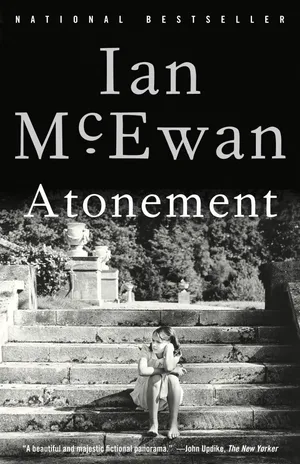
Our Review
Atonement begins on the hottest day of the summer of 1935, at a sprawling English country house, and what follows is one of the cruelest and most beautifully constructed novels of the 21st century. Thirteen-year-old Briony Tallis — aspiring writer, insufferable perfectionist — witnesses a series of charged interactions between her older sister Cecilia and Robbie Turner, the cleaning lady's son who has been educated alongside the Tallis children. Briony misinterprets what she sees, and her misinterpretation destroys two lives.
McEwan's genius in the first section is to show exactly how the disaster happens. Briony is not evil. She is a child with an overactive imagination and an inadequate understanding of adult sexuality, and she sees what her narrative instinct tells her to see rather than what is actually there. When a real crime occurs that same evening, Briony identifies Robbie as the perpetrator — confidently, incorrectly, and with consequences that are irreversible.
The novel then follows Robbie to the beaches of Dunkirk during World War II and Briony to a London hospital where she trains as a nurse, and both sections are among the finest sustained pieces of prose in contemporary English fiction. But the book's true devastation arrives in its final pages, where McEwan executes a narrative twist so elegant and so merciless that it reframes everything you have just read. Atonement is a book about the power of storytelling, and it uses that power against you.
Why This Book Earned Its Place in the Top 100
Atonement belongs on this list because it is one of the most structurally brilliant novels published in the last fifty years. McEwan accomplishes something extraordinarily difficult: he writes a book that works simultaneously as a lush period drama, a harrowing war novel, a psychological study of guilt, and a meditation on the ethics of fiction itself. The fact that all four of these strands converge in a final revelation that is both devastating and, in retrospect, inevitable is a feat of literary engineering that few novelists have matched.
The book also earns its place for its moral seriousness. Atonement asks whether art can repair the damage that life inflicts — whether a writer's act of imagination can atone for the failures of a person's act of imagination. McEwan's answer is complex and uncomfortable. The novel does not offer easy forgiveness. It suggests that some mistakes cannot be undone, that the stories we tell ourselves are always, at some level, acts of self-deception, and that the longing for atonement may be the closest we ever get to achieving it. It is a novel that haunts you long after the final page.
Who Should Read This Book
- •Readers who appreciate literary craftsmanship — the structure of Atonement is a masterclass in how form and content can reinforce each other to devastating effect.
- •Anyone interested in World War II fiction — the Dunkirk retreat sequence is one of the finest war passages in modern literature.
- •Writers and aspiring writers — Atonement is a profound meditation on the power, responsibility, and moral danger of storytelling.
- •Fans of psychological fiction — the exploration of how a child's misperception can spiral into lifelong consequences is gripping and painfully realistic.
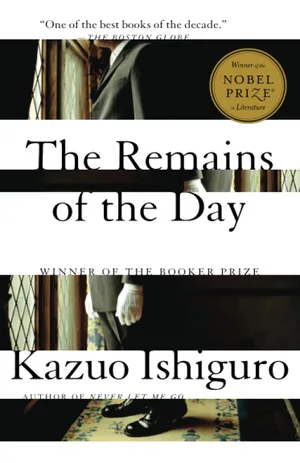
- •Readers who loved The Remains of the Day — both novels explore the tragedy of what remains unsaid and the impossibility of reversing the past.
Key Themes and Takeaways
- Guilt and atonement
- Briony spends her entire life trying to atone for a childhood mistake that destroyed two people's lives, raising the question of whether true atonement is ever possible.
- The power and danger of storytelling
- The same imagination that makes Briony a writer is what causes the catastrophe — narrative instinct is both gift and weapon.
- Perspective and misinterpretation
- The novel demonstrates how the same events, seen from different vantage points, can produce radically different and irreconcilable narratives.
- Class and privilege
- Robbie's vulnerability is inseparable from his class position — the Tallis family's wealth and status make his destruction possible and easy.
- War and its consequences
- The Dunkirk sections show how war amplifies personal tragedy into something collective and overwhelming.
- The ethics of fiction
- McEwan asks whether a novelist has the right to rewrite reality — and whether the reader has the right to be consoled by that rewriting.
Cultural and Historical Impact
Atonement was published in 2001 and was shortlisted for the Booker Prize. It won the WH Smith Literary Award, the National Book Critics Circle Award, the Los Angeles Times Book Prize for Fiction, and the Santiago Prize for the European Novel. The 2007 film adaptation, directed by Joe Wright and starring Keira Knightley, James McAvoy, and Saoirse Ronan, was nominated for seven Academy Awards and won Best Score. Time magazine named Atonement one of the 100 greatest English-language novels published since 1923. The novel has been translated into more than 30 languages and has sold millions of copies worldwide. It is widely taught in university literature courses and is considered McEwan's masterpiece.
Notable Quotes
“How can a novelist achieve atonement when, with her absolute power of deciding outcomes, she is also God? There is no one, no entity or higher form that she can appeal to, or be reconciled with, or that can forgive her.”
“A person is, among all else, a material thing, easily torn and not easily mended.”
“It wasn't only wickedness and scheming that made people unhappy, it was confusion and misunderstanding; above all, it was the failure to grasp the simple truth that other people are as real as you.”
If You Loved Atonement, Read These Next
Ready to read Atonement?
Anchor Books · 351 pages
Buy Atonement on Amazon