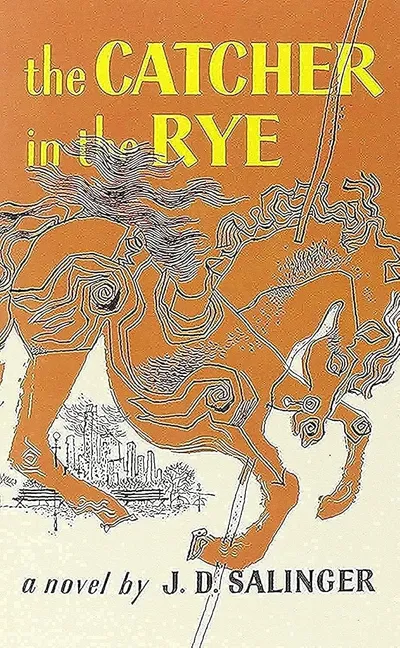
Our Review
J.D. Salinger's "The Catcher in the Rye" is either the most important coming-of-age novel ever written or the most overrated — and that polarization is itself a testament to its power. Narrated by sixteen-year-old Holden Caulfield in a voice so distinctive it practically invented the modern first-person teenage narrator, the novel follows Holden over three days in New York City after he has been expelled from yet another prep school.
On the surface, not much happens. Holden wanders Manhattan, checks into a seedy hotel, goes to bars, visits an old teacher, sneaks home to see his little sister Phoebe. But inside Holden's head, everything is happening — a war between his desperate desire to remain innocent and his horrified recognition that the adult world is full of "phonies." His obsessive fixation on protecting children from the corruption he sees everywhere — crystallized in his fantasy of being "the catcher in the rye," standing at the edge of a cliff to catch children before they fall — is both deeply moving and clearly symptomatic of a mind in crisis.
What makes the novel endure is the raw authenticity of Holden's voice. He is funny, infuriating, self-contradictory, and heartbreaking — often all in the same paragraph. Beneath his bravado and his compulsive lying is a grieving boy who has never processed his younger brother Allie's death, and who cannot figure out how to exist in a world that demands he grow up.
Why This Book Earned Its Place in the Top 100
"The Catcher in the Rye" earns its place on this list because it captured the interior life of adolescence with a fidelity that no previous novel had achieved, and in doing so it changed the way we think about young people, their pain, and their resistance to the adult world. Published in 1951, it gave voice to a generation of post-war teenagers who felt alienated from the conformist culture their parents were building, and it has continued to speak to every subsequent generation of readers who feel out of step with the world.
Salinger's achievement is primarily one of voice. Holden's narration — digressive, contradictory, full of slang and profanity and sudden moments of tenderness — set the template for countless coming-of-age novels that followed. Without Holden Caulfield, it is difficult to imagine the narrators of "Perks of Being a Wallflower," "Extremely Loud and Incredibly Close," or any number of contemporary young adult novels.
But the novel also endures because of what it does not say. Salinger trusts the reader to see what Holden cannot: that his rebellion against phoniness is itself a form of avoidance, a way of not confronting his grief and his fear. It is a novel about the terrifying threshold between childhood and adulthood, and it treats that threshold with the seriousness it deserves.
Who Should Read This Book
- •Teenagers and young adults feeling alienated or misunderstood — Holden's voice still resonates with anyone who has ever felt like the world is full of phonies.
- •Readers interested in the history of American counterculture — this novel was a touchstone for the Beat Generation, the 1960s, and every subsequent youth rebellion.
- •Anyone who loves voice-driven fiction — Salinger's creation of Holden's narrative voice is one of the great technical achievements in American literature.
- •People processing grief or loss — beneath the teenage rebellion, this is a devastatingly tender novel about a boy who cannot face the death of his brother.
Key Themes and Takeaways
- The pain of growing up
- Holden's entire crisis stems from his refusal — or inability — to accept that childhood innocence must eventually give way to adult complexity.
- Authenticity versus phoniness
- Holden's obsession with 'phonies' reflects a deep yearning for genuine human connection in a world he perceives as fundamentally dishonest.
- Grief and loss
- Allie's death haunts every page of the novel, and Holden's erratic behavior becomes comprehensible only when understood as unprocessed mourning.
- Alienation and isolation
- Holden desperately wants connection but sabotages every relationship he has, embodying the paradox of the lonely person who pushes everyone away.
- The desire to protect innocence
- The 'catcher in the rye' fantasy represents Holden's wish to freeze the world before children learn about suffering, a wish the novel recognizes as impossible but deeply human.
Cultural and Historical Impact
"The Catcher in the Rye" has sold over 65 million copies worldwide and continues to sell approximately 250,000 copies per year. It is one of the most frequently banned books in American history, challenged for its profanity, sexual content, and perceived promotion of rebellion. The novel's cultural footprint extends far beyond literature — it has been linked to several high-profile crimes, most notoriously Mark David Chapman's assassination of John Lennon in 1980. Salinger's reclusive lifestyle after its publication became legendary, and his refusal to authorize any film or stage adaptation only intensified the novel's mystique. The book remains a rite of passage for American teenagers and is assigned in high schools and universities across the country. Holden Caulfield's red hunting hat has become an iconic symbol of adolescent nonconformity.
Notable Quotes
“What really knocks me out is a book that, when you're all done reading it, you wish the author that wrote it was a terrific friend of yours.”
“Don't ever tell anybody anything. If you do, you start missing everybody.”
“I'm the most terrific liar you ever saw in your life. It's awful.”
If You Loved The Catcher in the Rye, Read These Next
Ready to read The Catcher in the Rye?
Little, Brown and Company · 277 pages
Buy The Catcher in the Rye on Amazon