Our Review
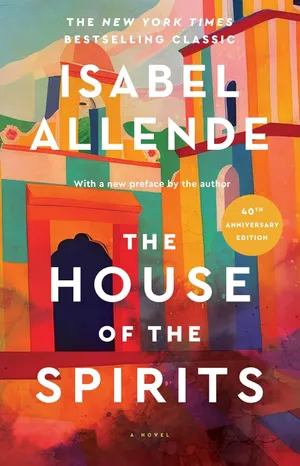
Isabel Allende's debut novel is a volcanic work of fiction — sprawling, passionate, and absolutely fearless. It follows four generations of the Trueba family in an unnamed South American country (transparently Chile) as they live through revolution, dictatorship, love affairs, and supernatural events that are treated with the same matter-of-fact authority as political history.
At its center is Esteban Trueba, a patriarch of monstrous ambition and terrible tenderness, whose life arc from impoverished young man to brutal landowner to broken old man is one of the most fully realized character studies in Latin American literature. Around him orbit the women who actually hold the family together: Clara, his clairvoyant wife who speaks to spirits and levitates furniture; Blanca, their daughter who carries on a lifelong forbidden romance; and Alba, the granddaughter whose political activism brings the family's story to its devastating conclusion.
Allende wrote this novel as a letter to her dying grandfather, and that urgency — the need to preserve memory before it vanishes — drives every page. The book moves between magical realism and raw political violence without ever losing its footing. It is a family chronicle, a political history, and a feminist reclamation all at once, and it announces Allende as one of the great storytellers of the twentieth century.
Why This Book Earned Its Place in the Top 100
The House of the Spirits earns its place because it does what the greatest novels do: it makes the political personal and the personal mythic. Allende took the magical realism that Garcia Marquez had pioneered and infused it with a distinctly feminine perspective — the spirits, the clairvoyance, the ancestral memory all flow through the women of the Trueba family, who see and remember what the men try to destroy.
This was also a groundbreaking novel for Latin American women's literature. When it was published in 1982, the literary boom in Latin America was overwhelmingly male. Allende crashed that party with a novel that could stand beside One Hundred Years of Solitude — and she did it by centering women's experience, women's power, and women's endurance in ways that her male predecessors had not.
The novel's final sections, depicting the coup and its aftermath, remain some of the most powerful political writing in fiction. Allende does not flinch. She shows what authoritarian violence looks like from inside the bodies it destroys, and then she shows that memory — the act of writing, of refusing to forget — is the only weapon that outlasts the guns.
Who Should Read This Book
- •Fans of One Hundred Years of Solitude who want another multi-generational saga with magical realism — Allende offers a distinctly feminine counterpart to Garcia Marquez.
- •Readers interested in Latin American history — the novel is a thinly veiled chronicle of Chile's political upheaval, culminating in the Pinochet coup.
- •Anyone who loves sprawling family sagas — the Trueba family is as vivid and complicated as any dynasty in literature.
- •Feminist readers — the novel's women are its true protagonists, and their strength is rendered without sentimentality.
- •People who appreciate novels that blend the supernatural with the real — Allende moves between spirits and soldiers with total confidence.
Key Themes and Takeaways
- Memory and storytelling as resistance
- The novel argues that writing down what happened is itself an act of defiance against those who would erase history.
- Class, land, and power
- Esteban Trueba's rise from poverty to wealth is built on exploitation, and the novel never lets him — or the reader — forget it.
- Magical realism and feminine intuition
- The supernatural gifts of the Trueba women represent a way of knowing that patriarchal society cannot control or suppress.
- Political violence and its aftermath
- The military coup shatters every character's illusions and forces the question of how to live in a broken country.
- Cycles of love and violence
- The family repeats patterns of passion and destruction across generations, suggesting that history is personal before it is political.
Cultural and Historical Impact
Published in 1982, The House of the Spirits was an immediate international bestseller, translated into over 35 languages and selling more than 70 million copies across Allende's career (this novel launched it all). It was adapted into a 1993 film starring Meryl Streep, Glenn Close, Jeremy Irons, and Winona Ryder. The novel established Allende as the world's most widely read Spanish-language author and opened the door for a generation of Latin American women writers. It won the Panorama Literario award in Chile and has been a staple of university literature courses for four decades. In Chile, the novel remains politically charged — a literary monument to the memory of those who suffered under the Pinochet regime.
Notable Quotes
“You can't find someone who doesn't want to be found.”
“There is no death, daughter. People die only when we forget them. If you can remember me, I will be with you always.”
“Barrabas came to us by sea, the child Clara wrote in her delicate calligraphy.”
If You Loved The House of the Spirits, Read These Next
Ready to read The House of the Spirits?
Atria Books · 448 pages
Buy The House of the Spirits on Amazon