Our Review
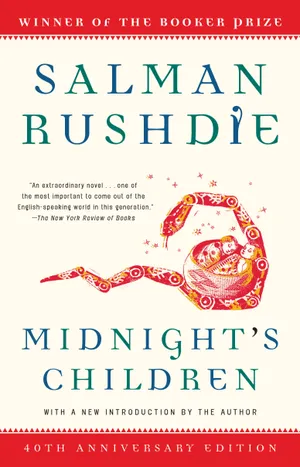
Salman Rushdie's Midnight's Children is a novel so ambitious that it attempts to contain an entire nation's history inside a single human body. Saleem Sinai is born at the stroke of midnight on August 15, 1947 — the exact moment of India's independence from British rule. He is one of 1,001 children born in that first hour, all of whom are gifted with supernatural powers. Saleem's power is telepathy, and he uses it to convene a parliament of the midnight's children inside his own head.
The novel is Saleem's autobiography, narrated to his companion Padma as he sits in a pickle factory, literally and figuratively preserving the past. He traces his family across three generations — from his grandfather's encounter with a woman he can only see through a perforated sheet, to his parents' troubled marriage, to his own entanglement with every major event in postcolonial Indian history: Partition, the Language Marches, the Indo-Pakistani wars, the Emergency under Indira Gandhi.
Rushdie's prose is a fireworks display. Sentences pile clause upon clause, mixing English with Hindi and Urdu, high culture with Bollywood, mythology with slapstick. The novel's energy is relentless and sometimes exhausting — by design. Rushdie writes the way India talks: all at once, from every direction, with no patience for orderly queues.
Midnight's Children is not a book you read passively. It demands that you keep up, that you let go of Western narrative expectations, and that you surrender to a voice unlike any other in literature.
Why This Book Earned Its Place in the Top 100
Midnight's Children earns its place because it reimagined what the postcolonial novel could do. Before Rushdie, novels about the end of empire tended toward realism — careful, dignified, understated. Rushdie detonated that model. He showed that the experience of a nation being born deserved a form as chaotic, contradictory, and overflowing as the experience itself.
The novel's influence on world literature is difficult to overstate. It opened the door for a generation of writers — Arundhati Roy, Kiran Desai, Junot Díaz, Zadie Smith — who saw that they could mix traditions, languages, and registers without asking permission. Magical realism was not new, but Rushdie's particular fusion of it with Indian storytelling traditions, English literary form, and sheer linguistic exuberance was unprecedented.
Beyond influence, the novel endures because Saleem Sinai is one of literature's great unreliable narrators. He gets dates wrong, contradicts himself, and freely admits to embellishment. But his errors are the point: history, Rushdie argues, is not what happened but what we remember, and memory is always an act of creation. Midnight's Children is the autobiography of a nation written by a man who knows that all autobiographies are fiction.
Who Should Read This Book
- •Anyone interested in India — this novel is the most exhilarating literary introduction to the subcontinent's modern history ever written.
- •Fans of magical realism — Rushdie's version is denser, funnier, and more politically charged than García Márquez's, and the two make extraordinary companions.
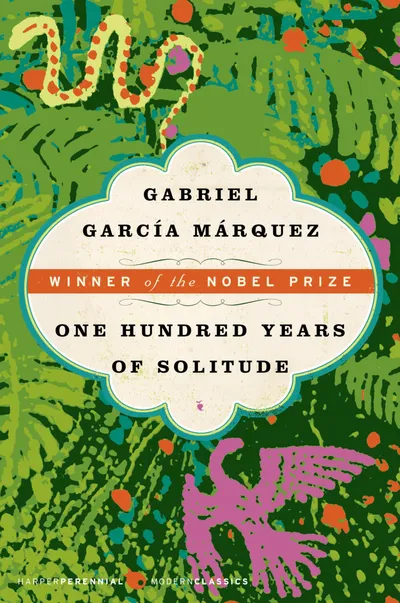
- •Readers who enjoy ambitious, maximalist fiction — if you loved One Hundred Years of Solitude, Midnight's Children is its subcontinental sibling.
- •Anyone interested in how personal identity and national identity intertwine — Saleem's inability to separate himself from India is the novel's central insight and its greatest joke.
Key Themes and Takeaways
- History and personal identity
- Saleem's life is literally inseparable from India's, suggesting that we are all authored by the historical moments into which we are born.
- Memory and storytelling
- The novel's deliberate errors and contradictions argue that memory is always a form of fiction, and that this makes it more, not less, valuable.
- Postcolonial nationhood
- India's birth is presented as both miraculous and traumatic, full of promise that is immediately betrayed by partition and political violence.
- Multiplicity and fragmentation
- Saleem's cracking body mirrors a nation that contains multitudes and is constantly threatening to fly apart.
- Power and corruption
- The Emergency sections present political authoritarianism as a direct assault on the diversity and promise that independence was supposed to protect.
Cultural and Historical Impact
Published in 1981, Midnight's Children won the Booker Prize that year and was subsequently named the "Booker of Bookers" in 1993 and the "Best of the Booker" in 2008 — the best novel to win the prize in its first 25 and 40 years, respectively. It has been translated into numerous languages and adapted into a 2012 film directed by Deepa Mehta with a screenplay by Rushdie himself. The novel is widely credited with launching the international boom in Indian English-language fiction. It also indirectly led to Rushdie's later confrontation with censorship — the formal ambition and political frankness of Midnight's Children established the voice that would produce The Satanic Verses and the fatwa that followed.
Notable Quotes
“Who what am I? My answer: I am the sum total of everything that went before me, of all I have been seen done, of everything done-to-me.”
“To understand just one life you have to swallow the world.”
“Most of what matters in your life takes place in your absence.”
If You Loved Midnight's Children, Read These Next

Ready to read Midnight's Children?
Random House Trade Paperbacks · 536 pages
Buy Midnight's Children on Amazon