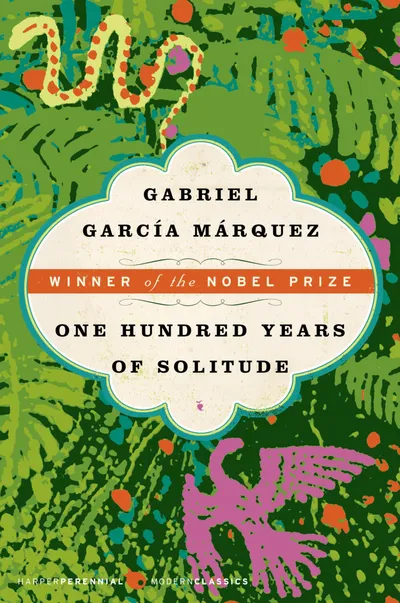
Our Review
Gabriel García Márquez's "One Hundred Years of Solitude" is less a novel than a literary hurricane — a sprawling, intoxicating chronicle of the Buendía family and their founding of the mythical town of Macondo, spanning seven generations of love, madness, ambition, and decay. From the moment José Arcadio Buendía leads a band of settlers to found a new town beside a river of prehistoric stones, García Márquez plunges us into a world where the miraculous and the mundane are utterly inseparable — where a woman ascends to heaven while hanging laundry, where it rains for four years straight, where a dead man's blood flows through the streets to find his mother.
This is the novel that brought magical realism to the world stage, and no one before or since has wielded the technique with such confidence and purpose. The magic is never decorative — it is the natural expression of a Latin American reality that European realism could never capture. The repetitions of names, obsessions, and fates across generations create a hypnotic pattern that feels less like a family saga than a creation myth.
Reading it for the first time is disorienting, exhilarating, and occasionally overwhelming — the sheer density of incident and character can feel like drinking from a fire hose. But surrender to its rhythm, and you will find yourself inside one of the most extraordinary imaginative achievements of the twentieth century.
Why This Book Earned Its Place in the Top 100
"One Hundred Years of Solitude" occupies a singular place in world literature because it did something that very few novels ever manage: it changed what fiction was allowed to be. Published in 1967, it shattered the dominance of European realism and proved that the stories of Latin America — with their blend of history, myth, and the surreal — were not provincial oddities but universal masterworks. It almost single-handedly created the Latin American literary boom and opened the door for writers from every continent to tell their stories in their own idioms.
The novel's achievement is not merely formal. García Márquez encodes within the Buendía saga the entire political and social history of Colombia — and by extension, of colonized peoples everywhere. The cycles of revolution and tyranny, the arrival and withdrawal of foreign capital, the erasure of collective memory — these are not metaphors but lived realities rendered in prose of astonishing beauty and imaginative freedom.
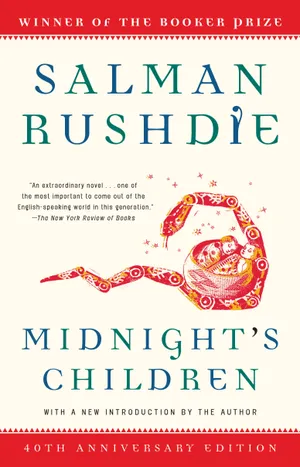
Its influence is incalculable. Salman Rushdie, Toni Morrison, Isabel Allende, and countless other major writers have acknowledged their debt to this novel. It proved that the novel could be both radically experimental and deeply accessible, a feat that still inspires writers around the world.
Who Should Read This Book
- •Adventurous readers ready for a novel unlike anything they have encountered before — this is literature at its most imaginatively daring and emotionally overwhelming.
- •Anyone interested in Latin American history and culture — García Márquez weaves a century of Colombian experience into a single family's story with extraordinary depth.
- •Fans of magical realism who want to experience the genre at its source — this is the novel that defined the movement and remains its highest achievement.
- •Readers who love multi-generational family sagas — the Buendías, with their recurring names and obsessions, form one of fiction's most unforgettable dynasties.
- •Writers seeking to expand their sense of what is possible in fiction — García Márquez's fusion of the mythic and the political remains a masterclass in narrative ambition.
Key Themes and Takeaways
- Solitude and isolation
- Every Buendía is ultimately alone, trapped in their obsessions and unable to truly connect, making solitude the family's defining and inescapable inheritance.
- Cyclical time and repetition
- History in Macondo does not progress but spirals, with each generation repeating the mistakes and passions of the last, suggesting that human nature is unchangeable.
- Memory and forgetting
- The novel explores how communities construct and lose their histories, from the insomnia plague that erases memory to the massacre that the town collectively forgets.
- The collision of myth and politics
- García Márquez seamlessly blends magical events with political realities — civil wars, banana plantations, foreign exploitation — to create a portrait of Latin American experience.
- Love, desire, and obsession
- The Buendías love with a ferocity that borders on madness, and the novel traces how passion can be both the most vital and most destructive human force.
- The rise and fall of civilizations
- Macondo's arc from paradise to ruin mirrors the trajectory of countless societies, making the novel a parable of human ambition and its inevitable decline.
Cultural and Historical Impact
"One Hundred Years of Solitude" has sold over 50 million copies and has been translated into 46 languages, making it the most widely read work of Latin American literature in history. It was instrumental in García Márquez's receiving the Nobel Prize in Literature in 1982, with the Swedish Academy citing his novels in which "the fantastic and the realistic are combined in a richly composed world of imagination." The novel essentially launched the Latin American literary boom, bringing international attention to writers like Julio Cortázar, Carlos Fuentes, and Mario Vargas Llosa. Netflix released a long-anticipated television adaptation in 2024, filmed entirely in Spanish in Colombia. The novel's opening line — "Many years later, as he faced the firing squad..." — is one of the most imitated in literary history, and the word "Macondo" has entered the Spanish language as a synonym for any surreal or chaotic place.
Notable Quotes
“Many years later, as he faced the firing squad, Colonel Aureliano Buendía was to remember that distant afternoon when his father took him to discover ice.”
“It's enough for me to be sure that you and I exist at this moment.”
“He really had been through death, but he had returned because he could not bear the solitude.”
If You Loved One Hundred Years of Solitude, Read These Next



Ready to read One Hundred Years of Solitude?
Harper Perennial Modern Classics · 417 pages
Buy One Hundred Years of Solitude on Amazon