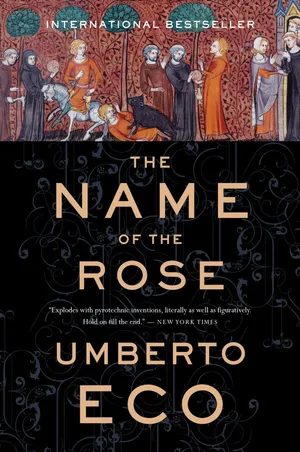
Our Review
Umberto Eco was one of the world's foremost semioticians — a scholar of signs, symbols, and meaning — and he wrote The Name of the Rose as a novel that is itself a sign to be decoded. Published in 1980, it is set in a wealthy Italian Benedictine monastery in 1327, where Franciscan friar William of Baskerville and his young novice Adso of Melk arrive to participate in a theological debate. They find instead a series of murders that seem to follow the pattern of the Book of Revelation.
William is a medieval Sherlock Holmes — brilliant, empirical, and dangerously ahead of his time. He investigates the deaths using logic and observation while the monastery's leadership turns to superstition and the Inquisition. The murders are connected to the monastery's labyrinthine library, one of the greatest in Christendom, and to a book that someone will kill to keep hidden.
Eco does not make this easy. The novel is dense with Latin, theological argument, architectural description, and medieval philosophy. There are passages that read more like a dissertation than a thriller. But this density is the point. Eco wanted to show that ideas are the most dangerous things in the world — more dangerous than swords, more dangerous than fire. The monks of this abbey are willing to commit murder over the question of whether Christ laughed.
For readers willing to meet Eco halfway, The Name of the Rose is an extraordinary experience: a thriller where the weapon is knowledge, the crime scene is a library, and the stakes are nothing less than what humanity is allowed to know.
Why This Book Earned Its Place in the Top 100
The Name of the Rose earns its place because it proved that intellectual fiction could also be thrilling popular entertainment. Before Eco, the idea that a novel stuffed with medieval philosophy, semiotics, and ecclesiastical politics could sell 50 million copies would have seemed absurd. Eco demonstrated that readers were hungry for intelligence — that a mystery could be more compelling, not less, when its solution required understanding the history of Western thought.
The novel also earns its place as a profound meditation on the relationship between knowledge and power. The hidden book at the center of the mystery is Aristotle's lost treatise on comedy — a text that, in Eco's telling, could undermine the entire edifice of medieval authority by teaching people that laughter is compatible with faith. The villain's argument — that laughter is dangerous because it dissolves fear, and fear is necessary for obedience — is one of the most chilling defenses of censorship ever written.
Finally, the novel is a masterclass in literary architecture. Eco built his abbey like a real building, his library like a real labyrinth, and his theology like a real argument. The result is a fictional world so meticulously constructed that it becomes, paradoxically, more real than most novels set in the present day.
Who Should Read This Book
- •Mystery lovers who want intellectual substance — this is the thinking person's detective novel, and William of Baskerville is one of the great fictional investigators.
- •History buffs — the recreation of fourteenth-century monastic life is so detailed and immersive that you can smell the ink and the incense.
- •Readers interested in the history of ideas — Eco dramatizes the tension between faith and reason, censorship and knowledge, with more clarity and excitement than most nonfiction.
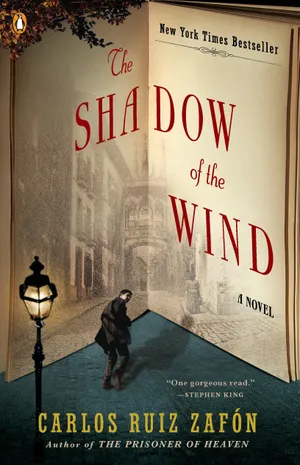
- •Anyone who enjoyed The Shadow of the Wind — both novels are love letters to libraries and the dangerous power of books.
- •Patient readers who enjoy being challenged — the novel rewards effort in ways that lighter fiction cannot match.
Key Themes and Takeaways
- Knowledge and power
- The monastery's library is both a treasure house and a prison — knowledge is hoarded because those who control it control the world.
- Faith versus reason
- William's empirical method clashes with the monastery's reliance on authority and revelation, anticipating the Enlightenment by centuries.
- Censorship and the fear of laughter
- The hidden book on comedy represents the idea that joy and humor threaten authoritarian structures that depend on solemnity and fear.
- Signs and interpretation
- As a semiotician, Eco fills the novel with signs that demand interpretation — and with warnings about the danger of interpreting wrongly.
- The labyrinth
- The library's physical labyrinth mirrors the novel's intellectual one — every answer leads to more questions, and the center may be empty.
Cultural and Historical Impact
Published in Italian in 1980, The Name of the Rose has sold over 50 million copies worldwide and been translated into more than 40 languages. The 1986 film adaptation starred Sean Connery as William of Baskerville and was a critical and commercial success. A television miniseries starring John Turturro premiered in 2019. The novel single-handedly launched the genre of the "intellectual thriller" and influenced writers from Dan Brown to Arturo Pérez-Reverte. Eco's decision to write the novel — his first — at age 48, after decades as an academic, demonstrated that scholarly expertise could be transformed into popular narrative. The abbey's labyrinthine library has become one of the iconic fictional spaces in world literature.
Notable Quotes
“Books are not made to be believed, but to be subjected to inquiry.”
“The good of a book lies in its being read. A book is made up of signs that speak of other signs, which in their turn speak of things.”
“Perhaps the mission of those who love mankind is to make people laugh at the truth, to make truth laugh, because the only truth lies in learning to free ourselves from insane passion for the truth.”
If You Loved The Name of the Rose, Read These Next
Ready to read The Name of the Rose?
Mariner Books · 536 pages
Buy The Name of the Rose on Amazon