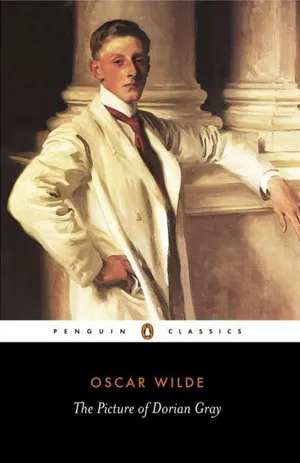
Our Review
Oscar Wilde's "The Picture of Dorian Gray" is a novel built on one of the most brilliant premises in all of fiction: a beautiful young man named Dorian Gray sits for a portrait by the artist Basil Hallward, and upon seeing the finished painting, wishes that the portrait would age while he remains forever young. The wish is granted. As years pass, Dorian retains his flawless beauty while the portrait — locked away in an attic — absorbs every sin, every cruelty, every moral degradation, growing more hideous with each transgression.
Under the influence of the witty, cynical Lord Henry Wotton — who delivers some of the most quotable lines in English literature — Dorian embarks on a life devoted entirely to pleasure and sensation, seeking out every experience that beauty and wealth can provide. But the portrait is always there, a record of his soul that he cannot destroy, a mirror that shows him the truth that the world cannot see.
Wilde wrote this novel in 1890, at the height of the Aesthetic Movement, and it functions brilliantly as both an embodiment and a critique of the philosophy of "art for art's sake." Lord Henry's seductive aphorisms about beauty and pleasure are intoxicating — and Wilde clearly enjoys writing them — but the novel systematically demonstrates their moral bankruptcy. The result is a work of delicious contradiction: a novel that is itself beautiful about the dangers of worshipping beauty, written by a man who championed style while understanding its limits.
Why This Book Earned Its Place in the Top 100
"The Picture of Dorian Gray" earns its essential status because it asks a question that has only grown more relevant in the age of Instagram, plastic surgery, and digital self-curation: What happens to the soul when we become obsessed with the surface? Wilde understood that the worship of youth and beauty — which his own era celebrated and which ours has elevated to a religion — is not merely shallow but actively destructive, corroding the moral core while the exterior remains pristine.
The novel also matters as the only novel by one of the English language's greatest writers. Wilde was primarily a playwright and essayist, and "Dorian Gray" brings to fiction the same dazzling wit, the same paradoxical intelligence, and the same subversive critique of Victorian hypocrisy that made his plays immortal. Lord Henry Wotton is among the most entertaining characters in fiction — a man whose every sentence is an epigram and whose philosophy of pure aestheticism is both irresistible and ultimately hollow.
Beyond its themes, the novel is a superbly constructed Gothic tale. The transformation of the portrait is genuinely horrifying, and Wilde builds suspense with the skill of the best thriller writers. The final scene — when Dorian attempts to destroy the portrait — is one of literature's most perfectly executed endings. It is a novel that entertains, disturbs, and makes you think, often simultaneously.
Who Should Read This Book
- •Readers who love witty, aphoristic prose — Wilde's writing is among the most quotable in the English language, and nearly every page contains a gem.
- •Anyone interested in questions of beauty, morality, and vanity — the novel's central premise is an unforgettable thought experiment about the costs of surface worship.
- •Fans of Gothic horror — the portrait's transformation is genuinely unsettling, and the novel's atmosphere of creeping dread is masterfully sustained.
- •People who enjoy philosophical fiction — the debates between Basil, Lord Henry, and Dorian about art, pleasure, and morality are as stimulating as they are entertaining.
- •Readers curious about Oscar Wilde — the novel is deeply autobiographical in its themes, and knowing Wilde's own fate adds layers of poignancy to every page.
Key Themes and Takeaways
- The worship of beauty and youth
- Dorian's Faustian bargain dramatizes the danger of elevating appearance above all other values — a critique that has only sharpened with time.
- Art and morality
- Wilde uses the novel to interrogate whether art should serve moral purposes or exist purely for its own sake, and the answer he arrives at is characteristically ambiguous.
- The duality of self
- The portrait and the person represent the split between the public self and the private soul, anticipating psychological theories about the divided self.
- Influence and corruption
- Lord Henry's seduction of Dorian's mind is as damaging as any physical act, raising questions about intellectual responsibility and the power of ideas.
- The impossibility of escaping consequence
- Despite his unchanged appearance, Dorian cannot escape the moral truth recorded in the portrait — suggesting that conscience, like art, cannot be permanently suppressed.
Cultural and Historical Impact
"The Picture of Dorian Gray" was first published in 1890 in Lippincott's Monthly Magazine and immediately caused a scandal — critics called it immoral and decadent, and its homoerotic undertones were used as evidence against Wilde during his infamous 1895 trial for "gross indecency." The novel has since been recognized as a masterpiece of Gothic fiction and has been adapted into numerous films, including a notable 1945 version that won an Academy Award for cinematography. The concept of the "Dorian Gray effect" — maintaining a youthful appearance while corruption festers beneath — has entered popular culture as a metaphor. The novel is widely taught in universities as a key text of the Aesthetic Movement and of queer literature. Wilde's aphorisms from the novel — "The only way to get rid of a temptation is to yield to it" — have become part of the common cultural vocabulary. The preface to the novel, a series of paradoxical statements about art, is considered one of the most important manifestos of aestheticism ever written.
Notable Quotes
“The only way to get rid of a temptation is to yield to it. Resist it, and your soul grows sick with longing for the things it has forbidden to itself.”
“To define is to limit.”
“Every portrait that is painted with feeling is a portrait of the artist, not of the sitter.”
If You Loved The Picture of Dorian Gray, Read These Next
Ready to read The Picture of Dorian Gray?
Penguin Classics · 272 pages
Buy The Picture of Dorian Gray on Amazon