Our Review
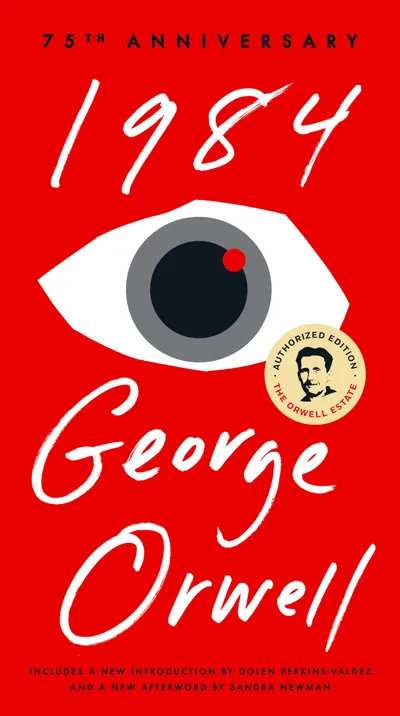
George Orwell finished writing 1984 in 1948, gravely ill with tuberculosis on a remote Scottish island, and the urgency of a dying man bleeds through every page. This is not a comfortable book. It grabs you by the collar and forces you to stare at what happens when language, truth, and individual thought are systematically dismantled by the state.
Winston Smith is a minor bureaucrat in the Ministry of Truth, where his job is to rewrite history to match whatever the Party currently claims is real. He knows the past is being erased. He knows the present is a lie. And in his quiet, terrified way, he begins to resist — first through a hidden diary, then through a forbidden love affair with Julia, and finally through what he believes is an underground resistance movement.
What makes 1984 devastating is not its plot but its architecture. Orwell did not merely imagine a dictatorship; he reverse-engineered the machinery of totalitarianism itself. Newspeak doesn't just restrict what people can say — it narrows what they can think. Doublethink doesn't just demand contradictions — it makes contradiction invisible. The telescreen doesn't just watch — it makes privacy itself a crime.
The novel's final act is a methodical, clinical destruction of a human mind. Orwell's refusal to offer false hope elevates 1984 from political thriller to permanent warning.
Why This Book Earned Its Place in the Top 100
Few novels have entered the language the way 1984 has. "Big Brother," "thoughtcrime," "doublethink," "Newspeak," and "memory hole" are now standard English, used daily by people who have never read the book. That alone is extraordinary — but the reason 1984 holds the #2 spot on our list goes deeper.
Orwell wrote a novel so precisely engineered that every generation discovers it describes their moment. In the 1950s, it was the Soviet Union. In the 1970s, it was Watergate-era surveillance. After 2001, it was the war on terror. In the age of algorithmic feeds and deepfakes, it is the erasure of shared reality itself. Books that can be re-read across decades and still cut are rare. Books that grow more relevant with time are almost nonexistent. 1984 is one of them.
Who Should Read This Book
- •Anyone who has never read it — its reputation is fully earned. The actual reading experience is more harrowing and more gripping than any summary prepares you for.
- •Students of political science or journalism — Orwell's analysis of how propaganda functions through language control, historical revision, and manufactured enemies remains the clearest map of those techniques ever written.
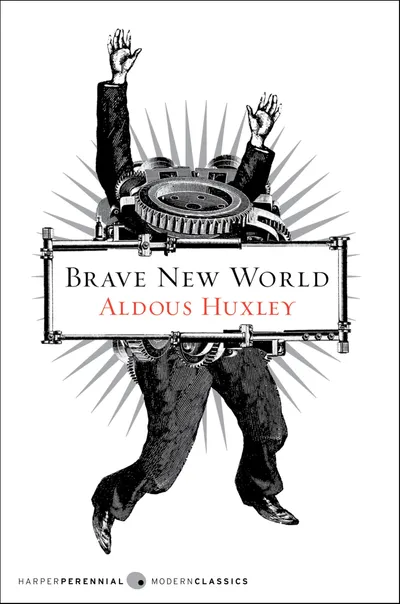
- •Readers who loved Brave New World — if Huxley showed what happens when we're seduced by pleasure, Orwell showed what happens when we're crushed by fear. Read both and decide which future we're closer to.
- •Anyone uneasy about surveillance culture — the telescreen was fiction, but your phone is not.
- •Readers who want more than entertainment — this is a book that changes the way you process news, evaluate language, and understand power.
Key Themes and Takeaways
- Totalitarianism and state control
- The Party's power doesn't come from armies; it comes from controlling what citizens believe is real.
- The manipulation of language
- Newspeak demonstrates that limiting vocabulary literally limits the capacity for dissent.
- Surveillance and privacy
- The telescreen anticipates modern debates about government and corporate surveillance with chilling accuracy.
- The mutability of truth
- Who controls the past controls the future; who controls the present controls the past.
- Individual resistance and its limits
- Winston's rebellion is deeply human, and its failure is the novel's most important statement.
- The psychology of power
- O'Brien's interrogation chapters are among the most disturbing examinations of power for its own sake ever written.
Cultural and Historical Impact
Published June 8, 1949 — just seven months before Orwell's death — 1984 has sold over 50 million copies worldwide and been translated into more than 65 languages. After the 2017 inauguration in the United States, sales surged 9,500% in a single week, sending it back to #1 on Amazon's bestseller list nearly 70 years after publication.
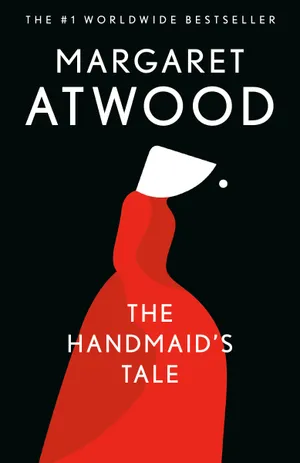
The novel was banned in the Soviet Union until 1988 and remains restricted in several countries. It has been adapted into film twice (1956 and 1984), stage plays, operas, and radio dramas, and has directly influenced works from The Handmaid's Tale to Black Mirror.
The word "Orwellian" — meaning the use of deceptive language and surveillance to control a population — is now in every major English dictionary.
Notable Quotes
“War is peace. Freedom is slavery. Ignorance is strength.”
“Perhaps one did not want to be loved so much as to be understood.”
“Every record has been destroyed or falsified, every book rewritten, every picture has been repainted, every statue and street building has been renamed, every date has been altered. And the process is continuing day by day and minute by minute. History has stopped.”
If You Loved 1984, Read These Next
Ready to read 1984?
Signet Classic · 328 pages
Buy 1984 on Amazon