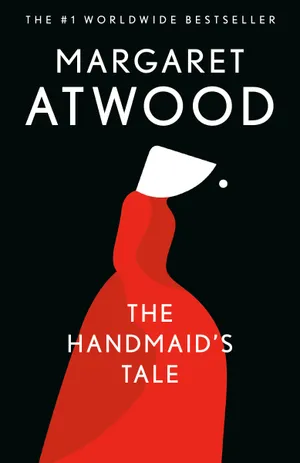
Our Review
Offred is a Handmaid in the Republic of Gilead — a theocratic dictatorship that has replaced the United States after a staged terrorist attack enabled religious extremists to suspend the Constitution, dissolve Congress, and strip women of all rights. In this new order, Offred's only value is her functioning ovaries. She is assigned to a Commander and his infertile Wife, and her job is to conceive a child through a ritualized act of state-sanctioned rape that Gilead calls "the Ceremony."
What makes Atwood's novel so terrifying is its plausibility. Every mechanism of oppression in Gilead has a historical precedent. Atwood has stated she included nothing in the novel that had not already been done somewhere, at some time. The Handmaids' red robes recall both Puritan shame and institutional uniform. The Biblical justification for reproductive servitude comes directly from Genesis. The gradual erosion of women's rights — bank accounts frozen, jobs eliminated, IDs revoked — follows the actual playbook of totalitarian takeovers.
Offred narrates in a voice that alternates between sharp observation and dreamlike dissociation, a survival mechanism so convincing it becomes its own form of horror. She remembers her previous life — her husband Luke, her daughter, her job, her name — in fragments that float up and then submerge, like a person drowning slowly. The novel is not about a future that might happen. It is about a present that keeps threatening to.
Why This Book Earned Its Place in the Top 100
The Handmaid's Tale is the dystopian novel of the feminist canon, and it has only grown more urgent since its publication in 1985. Atwood wrote it during the Reagan era, when the religious right was ascendant in American politics, and she asked a simple, devastating question: what if they won? Not halfway, not with compromises, but completely?
The novel earns its place because it does what the greatest dystopian fiction does — it makes you see the mechanisms of oppression that already exist around you. Gilead does not arrive overnight. It arrives through incremental steps, each one rationalized, each one met with insufficient resistance. Atwood understood that the most dangerous part of authoritarianism is not the final act of tyranny but the long series of small surrenders that precede it.
Unlike 1984, which depicts a totalitarian system at its zenith, The Handmaid's Tale focuses on the experience of one woman inside the machinery. This is not a novel about systems — it is a novel about a body inside a system. That intimacy is what makes it unbearable and essential. Offred's quiet, fractured narration is one of the great achievements of twentieth-century fiction. She does not resist with weapons. She resists by remembering, by telling, by refusing to accept that this is normal.
Who Should Read This Book
- •Anyone concerned about women's rights — this novel maps the mechanisms by which rights can be stripped away, and its map remains disturbingly accurate.
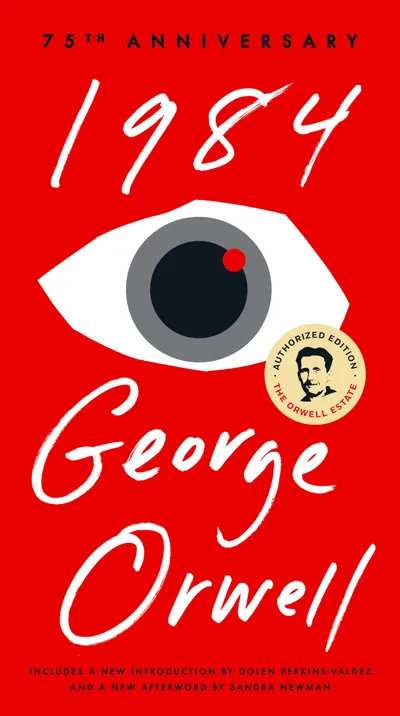
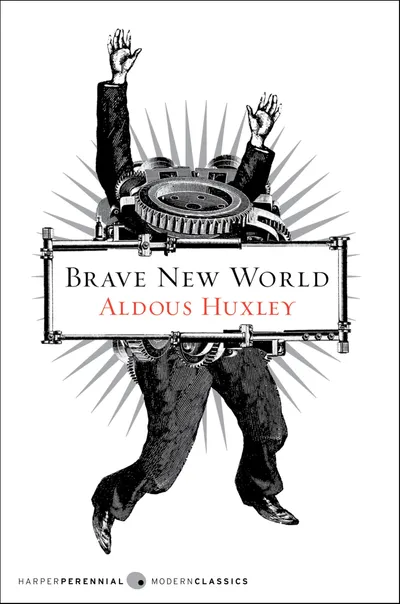
- •Readers who loved 1984 or Brave New World — Atwood's dystopia is the essential companion piece, centering gender and reproduction where Orwell centered language and Huxley centered pleasure.
- •Book clubs — few novels generate more passionate, more necessary conversation than this one.
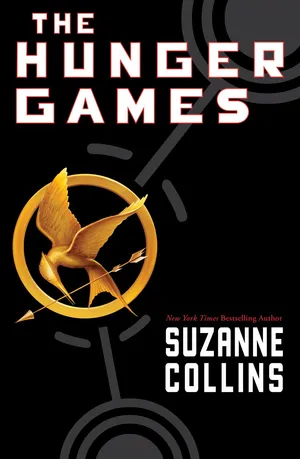
- •Young adults encountering dystopian fiction for the first time beyond The Hunger Games — this is the adult version, and it hits harder because it requires no speculative technology, only political will.
- •Anyone who thinks 'it can't happen here' — Atwood's most chilling achievement is showing exactly how it can.
Key Themes and Takeaways
- Theocratic totalitarianism
- Gilead uses Biblical literalism as the engine of state control, showing how religious language can be weaponized to justify absolute power.
- Control of women's bodies
- Reproductive coercion is the foundation of Gilead's social order, making the female body the battlefield on which power is exercised.
- The erasure of identity
- Offred has been stripped of her name, her money, her job, her child, and her autonomy — the novel charts what remains when everything external is taken.
- Complicity and resistance
- The Wives, Aunts, and Marthas who enforce Gilead's rules remind us that oppressive systems require the participation of the oppressed.
- Memory as rebellion
- Offred's act of narrating — of insisting on her story — is itself a form of resistance against a regime that demands she forget who she was.
- The fragility of rights
- Atwood shows that civil liberties are not permanent fixtures but ongoing negotiations that can be revoked with terrifying speed.
Cultural and Historical Impact
Published in 1985, The Handmaid's Tale won the Arthur C. Clarke Award and the Governor General's Literary Award and was shortlisted for the Booker Prize. It has sold over 8 million copies and been translated into 40 languages. The 2017 Hulu television adaptation starring Elisabeth Moss became a massive cultural phenomenon, winning 8 Primetime Emmy Awards in its first season, including Outstanding Drama Series. The Handmaid's red cloak and white bonnet became a symbol of protest, worn by activists at political demonstrations around the world — from abortion rights rallies to hearings on reproductive legislation. Atwood published a sequel, The Testaments, in 2019, which won the Booker Prize. The novel is one of the most widely taught works of fiction in high school and university English courses globally.
Notable Quotes
“Nolite te bastardes carborundorum. Don't let the bastards grind you down.”
“A rat in a maze is free to go anywhere, as long as it stays inside the maze.”
“Better never means better for everyone. It always means worse, for some.”
If You Loved The Handmaid's Tale, Read These Next

Ready to read The Handmaid's Tale?
Anchor Books · 311 pages
Buy The Handmaid's Tale on Amazon