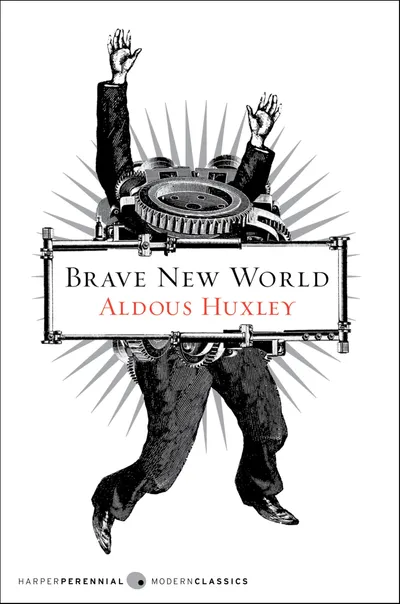
Our Review
Aldous Huxley's "Brave New World" is the dystopian novel that got the future right. While Orwell imagined a world controlled through fear and surveillance, Huxley imagined something far more insidious: a world controlled through pleasure. In the World State of 632 A.F. (After Ford), citizens are genetically engineered and conditioned from birth to accept their social caste, distracted by an endless supply of consequence-free sex, recreational drugs (the euphoric "soma"), and mindless entertainment. There is no need for tyranny because no one wants to rebel — contentment has been engineered so thoroughly that freedom has become unthinkable.
Into this perfectly regulated society comes Bernard Marx, an Alpha-Plus who feels vaguely dissatisfied with his world, and John the Savage, a man raised on a Reservation outside the World State who has educated himself on Shakespeare. John's collision with the "brave new world" — his horror at its soullessness, his desperate clinging to the messy, painful, beautiful chaos of authentic human experience — forms the novel's emotional and philosophical core.
What makes this novel so unnervingly prescient is that Huxley's dystopia does not look like a nightmare. It looks like a vacation. The citizens of the World State are not suffering — they are comfortable, entertained, and sedated. The horror lies in what they have surrendered for that comfort: art, love, family, grief, struggle, meaning. Huxley understood that the greatest threat to human freedom might not be the boot on the neck but the pill that makes you not care about the boot.
Why This Book Earned Its Place in the Top 100
"Brave New World" earns its essential status because, of all the dystopian novels written in the twentieth century, it has proven the most prophetically accurate about the direction of Western civilization. Published in 1932, it anticipated genetic engineering, antidepressant medication, virtual reality entertainment, consumer culture as social control, and the erosion of deep human relationships by superficial pleasure. Every time you scroll through social media instead of reading a book, every time an algorithm feeds you content designed to keep you engaged rather than informed, Huxley's novel becomes a little more relevant.
The novel also matters because it asks a question that Orwell's "1984" does not: What if people do not want to be free? What if comfort is more seductive than liberty? This is a far more troubling question for democratic societies, because it suggests that tyranny does not require a tyrant — just a populace willing to trade meaning for pleasure.
Huxley's writing is intelligent, sardonic, and deeply humane. His sympathy for John the Savage — a man who wants to feel everything, even pain — is the novel's beating heart. In a world that increasingly resembles the one Huxley imagined, this novel is not just important; it is urgent.
Who Should Read This Book
- •Anyone who has read '1984' and wants to encounter the other great dystopian vision — Huxley's nightmare of pleasure-as-control is the essential counterpart to Orwell's nightmare of fear-as-control.
- •Readers interested in the ethics of technology — the novel raises questions about genetic engineering, pharmacology, and entertainment that are more relevant now than when it was written.
- •People who enjoy philosophical fiction — the debates between John and Mustapha Mond in the final chapters are among the most stimulating in all of literature.
- •Social critics and cultural observers — Huxley's analysis of consumerism, distraction, and the commodification of happiness remains devastatingly on point.
Key Themes and Takeaways
- Freedom versus happiness
- The novel's central question is whether a society that guarantees happiness at the cost of freedom, art, and authentic emotion is a utopia or a dystopia.
- Technology as social control
- Huxley shows how scientific advances — from genetic engineering to pharmacology — can be weaponized to maintain a social order that serves the powerful.
- The cost of eliminating suffering
- By removing pain, grief, and struggle, the World State has also eliminated love, art, and meaning — suggesting that the two are inseparable.
- Consumerism and distraction
- Citizens are conditioned to consume constantly and to avoid solitude or reflection, anticipating our own culture of perpetual entertainment and disposability.
- The individual versus society
- Both Bernard and John, in different ways, represent the human need for authenticity in a world that has systematically engineered it away.
- The devaluation of art and literature
- Shakespeare, in the novel, represents everything the World State has sacrificed — beauty, complexity, the full spectrum of human emotion — and John's devotion to it is both noble and doomed.
Cultural and Historical Impact
"Brave New World" has sold millions of copies since its publication in 1932 and has been translated into nearly 50 languages. It is one of the most frequently assigned novels in English-speaking high schools and universities, often taught alongside Orwell's "1984." The phrase "brave new world" (originally from Shakespeare's "The Tempest") has entered common usage as shorthand for any technologically advanced but spiritually empty society. The novel has been adapted multiple times for television, including a 2020 Peacock series. "Soma" has become a cultural reference for any pleasure used to suppress critical thought. The novel is frequently cited in discussions about genetic engineering, pharmaceutical culture, social media addiction, and the future of artificial intelligence. Neil Postman's influential 1985 media critique "Amusing Ourselves to Death" explicitly argued that Huxley's vision, not Orwell's, was the one coming true in America.
Notable Quotes
“Words can be like X-rays if you use them properly — they'll go through anything. You read and you're pierced.”
“But I don't want comfort. I want God, I want poetry, I want real danger, I want freedom, I want goodness. I want sin.”
“Most human beings have an almost infinite capacity for taking things for granted.”
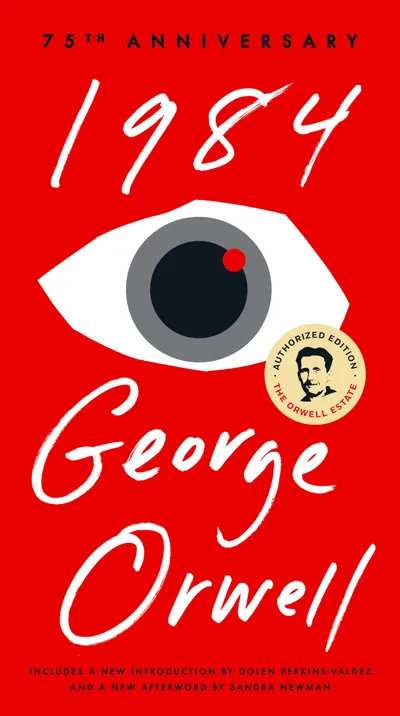
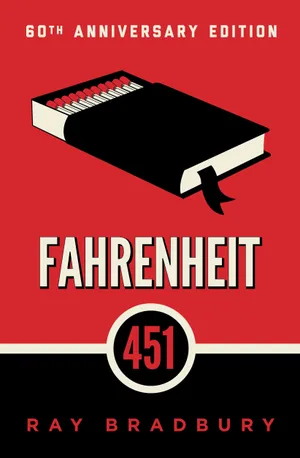
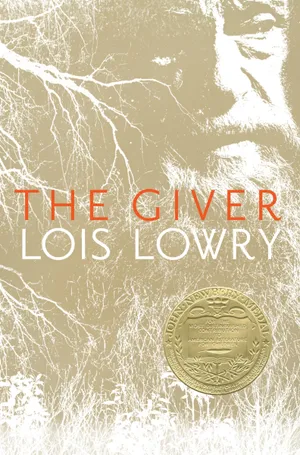
If You Loved Brave New World, Read These Next
Ready to read Brave New World?
Harper Perennial Modern Classics · 288 pages
Buy Brave New World on Amazon