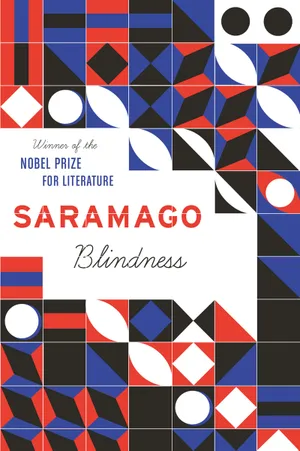
Our Review
José Saramago's Blindness begins with a man going blind at a traffic light. The blindness is not darkness — it is a sea of white, a luminous blankness. Within days, the epidemic spreads. An ophthalmologist goes blind. His patients go blind. Anyone who comes into contact with the afflicted goes blind. The government, panicking, quarantines the first victims in an abandoned mental asylum. One woman — the doctor's wife — can still see but pretends she cannot, in order to accompany her husband into internment.
What follows is one of the most disturbing novels of the twentieth century. Inside the asylum, society collapses in accelerated time. A group of thugs seizes control of the food supply and demands valuables, then women, in exchange for rations. Hygiene disintegrates. Cruelty becomes casual. The doctor's wife, the only witness to all of it, must decide what she is willing to do to protect the people she loves.
Saramago's prose mirrors the disorientation of the epidemic. There are no character names — only descriptions: the doctor, the girl with dark glasses, the boy with the squint. Dialogue is not separated by quotation marks; it flows into the narration like a stream. Sentences run on, sometimes for entire pages. The effect is suffocating and deliberate — you feel the blindness pressing in on you.
Blindness is an allegory, but it never feels merely allegorical. The physical details — the filth, the hunger, the violence — are rendered with such unflinching specificity that the horror is concrete, not abstract. Saramago strips civilization to its foundations and forces you to look at what remains.
Why This Book Earned Its Place in the Top 100
Blindness earns its place because it asks the question that most novels are afraid to touch: What holds civilization together, and how quickly would it fall apart if one fundamental assumption changed? Saramago's answer is terrifying. Deprive people of sight, and within weeks you get tyranny, sexual violence, and the total collapse of human dignity. The speed of the disintegration is the novel's most disturbing argument — it suggests that the veneer of civilization is far thinner than we want to believe.
But the novel is not nihilistic. The doctor's wife — the only character who can see the horror clearly — becomes an extraordinary figure of moral courage. She does not lose her humanity. She acts, she protects, she carries others when they cannot carry themselves. Her persistence is not heroic in any grand sense — it is the basic, stubborn refusal to let the worst in humanity become the only thing that survives.
Saramago won the Nobel Prize in Literature in 1998, and Blindness was cited as a central work in his achievement. The novel endures because its allegory is infinitely adaptable. Every crisis — pandemic, political collapse, climate disaster — activates its warning. It is a novel you hope you never need to understand, and one you cannot forget once you have read it.
Who Should Read This Book
- •Readers who appreciate allegory with visceral force — Saramago's novel operates on both the symbolic and the physical level, and the combination is devastating.
- •Anyone interested in how societies collapse — this is the most concentrated fictional exploration of that process, more powerful than any sociological study.
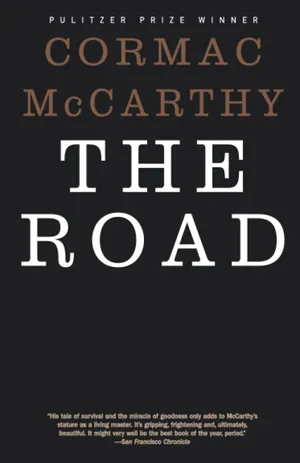
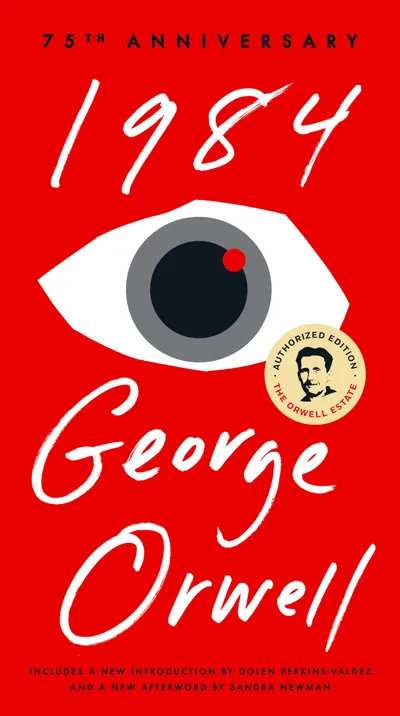
- •Fans of dystopian fiction who want something different — Blindness shares DNA with 1984 and The Road but takes a completely original approach to civilizational breakdown.
- •Readers with strong stomachs — the novel does not flinch from its subject matter, and its depictions of suffering are graphic and necessary.
Key Themes and Takeaways
- The fragility of civilization
- A single change in human capability exposes how quickly social structures, moral norms, and human decency can disintegrate.
- Sight as metaphor
- The white blindness suggests not absence but excess — a world so flooded with light that meaning itself becomes invisible.
- Power and exploitation
- The thugs who seize the food supply demonstrate how quickly power vacuums are filled by those willing to use violence.
- Compassion under extremity
- The doctor's wife represents the possibility that human decency can survive the worst circumstances, though the cost is enormous.
- Identity and anonymity
- The absence of character names and the loss of visual recognition strip identity to its behavioral core — you are what you do, not what you are called.
Cultural and Historical Impact
Published in Portuguese in 1995 and in English in 1997, Blindness was central to José Saramago's Nobel Prize in Literature in 1998. It has been translated into more than 30 languages and adapted into a 2008 film directed by Fernando Meirelles, starring Julianne Moore and Mark Ruffalo. A sequel, Seeing, was published in 2004. During the COVID-19 pandemic, sales of the novel surged worldwide as readers turned to it for its uncomfortably prescient depiction of society under epidemic conditions. Saramago's distinctive prose style — long sentences without conventional punctuation — has influenced writers across multiple languages and established a new model for how literary fiction could represent collective crisis.
Notable Quotes
“I don't think we did go blind, I think we are blind, Blind but seeing, Blind people who can see, but do not see.”
“Inside us there is something that has no name, that something is what we are.”
“The only thing more terrifying than blindness is being the only one who can see.”
If You Loved Blindness, Read These Next
Ready to read Blindness?
Harvest Books · 349 pages
Buy Blindness on Amazon