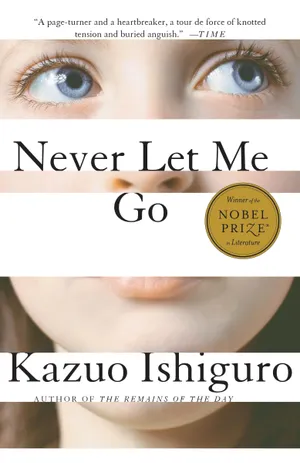
Our Review
Kathy H. is thirty-one years old and has been a "carer" for almost twelve years. She is looking back on her childhood at Hailsham, a seemingly idyllic English boarding school where she grew up with her closest friends, Tommy and Ruth. The memories are warm — art classes, secret notes, teenage jealousies — but something is deeply wrong, and Ishiguro reveals what that something is with such quiet, measured restraint that the horror arrives almost gently.
The students of Hailsham are clones, raised to donate their vital organs until they "complete" — a euphemism for die. They know this. They have always known this. And the most devastating thing about Never Let Me Go is that they accept it. There is no rebellion, no escape attempt, no dramatic confrontation with the system. Instead, there is a love triangle, small kindnesses, petty betrayals, and the slow realization that even a life with a predetermined endpoint still contains the full range of human feeling.
Ishiguro's genius here is in the gap between what is said and what is felt. Kathy's narration is calm, even pleasant, and it is precisely that calm that breaks your heart. She describes the most monstrous aspects of her existence with the same measured tone she uses for school gossip, because she has been conditioned — as we all have, the novel implies — to accept the terms of her existence without question.
Why This Book Earned Its Place in the Top 100
Never Let Me Go earns its place by using science fiction's tools to ask the most fundamental questions about what it means to be human — and then refusing to answer them with the comfort of genre conventions. There is no uprising, no hero, no satisfying resolution. Instead, Ishiguro forces you to sit with the unbearable: the knowledge that these characters will die young, that they know it, and that they respond not with rage but with the same small hopes, loves, and disappointments that define every human life.
The novel is also a masterclass in the use of unreliable normalcy. By telling the story through Kathy's accepting, even affectionate perspective, Ishiguro implicates the reader. We recognize the horror, but we also recognize our own capacity to accept terrible things when they are presented as ordinary. The parallel to how societies accept systemic injustice — organ harvesting here, but the metaphor extends — is never stated but impossible to miss.
This is one of the rare novels that gets more powerful with time. Days after finishing it, you'll find yourself still thinking about what it means to live a life that is, by design, not fully your own.
Who Should Read This Book
- •Readers who want science fiction that prioritizes emotion over technology — this is a sci-fi novel with no gadgets, no spaceships, and no action, and it is devastating.
- •Anyone interested in bioethics — the novel raises profound questions about organ donation, medical ethics, and the value of human life without ever becoming didactic.
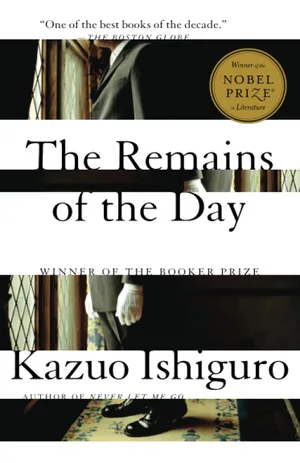
- •Fans of Kazuo Ishiguro — this may be his most emotionally powerful novel, and its relationship to The Remains of the Day's themes of repression and acceptance is fascinating.
- •People who love quiet, devastating fiction — if you prefer books that haunt rather than shock, this is among the finest examples.
- •Book clubs looking for rich discussion material — the ethical, philosophical, and emotional layers here generate extraordinary conversation.
Key Themes and Takeaways
- What makes us human
- The clones' full emotional lives challenge every assumption about what qualifies a being for moral consideration.
- Acceptance versus resistance
- The characters' failure to rebel is the novel's most disturbing and most human element — we all accept unacceptable conditions more often than we admit.
- Memory and nostalgia
- Kathy's backward-looking narration suggests that memory is how we give meaning to lives that may otherwise seem purposeless.
- Art and the soul
- Hailsham's emphasis on creativity raises the question of whether art proves the existence of an interior life worthy of protection.
- Love in the face of mortality
- The relationships between Kathy, Tommy, and Ruth are made more poignant by their foreshortened timelines, but the novel asks whether all love exists under that same shadow.
Cultural and Historical Impact
Published in 2005, Never Let Me Go was shortlisted for the Booker Prize and the Arthur C. Clarke Award and was named by Time magazine as the best novel of 2005. It has been translated into over 30 languages and sold millions of copies worldwide. A 2010 film adaptation starred Carey Mulligan, Andrew Garfield, and Keira Knightley. The novel is frequently included on lists of the greatest novels of the 21st century and is widely taught in university courses on contemporary literature, bioethics, and science fiction. Ishiguro himself cited it as his most personal novel, and its influence on subsequent literary science fiction — including works by authors like Emily St. John Mandel and Claire North — is significant.
Notable Quotes
“What I'm not sure about, is if our lives have been so different from the lives of the people we save. We all complete.”
“Memories, even your most precious ones, fade surprisingly quickly. But I don't go along with that. The memories I value most, I don't ever see them fading.”
“It was like when you make a move in chess and just as you take your finger off the piece, you see the mistake you've made, and there's this panic because you don't know yet the scale of disaster you've left yourself open to.”
If You Loved Never Let Me Go, Read These Next
Ready to read Never Let Me Go?
Vintage International · 288 pages
Buy Never Let Me Go on Amazon