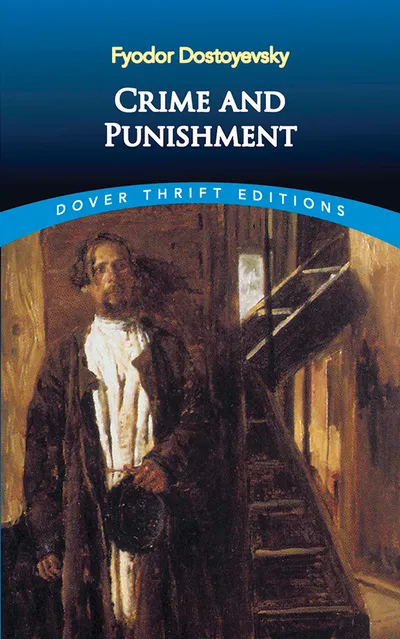
Our Review
Fyodor Dostoevsky's "Crime and Punishment" is a novel built on one of the most audacious premises in all of fiction: what happens to a man's soul after he commits murder? Rodion Raskolnikov, a desperately poor former student living in a suffocating garret in St. Petersburg, convinces himself that he is an "extraordinary" man — a Napoleon — who stands above conventional morality. To prove his theory, he murders an elderly pawnbroker with an axe. The crime itself takes mere pages. The punishment — psychological, spiritual, existential — takes the rest of the novel.
What follows is one of literature's most harrowing descents into a guilty mind. Raskolnikov wanders the streets of St. Petersburg in a fever of paranoia, self-justification, and despair, drawn into a cat-and-mouse game with the brilliantly perceptive detective Porfiry Petrovich while simultaneously being pulled toward redemption by Sonya Marmeladova, a young woman driven to prostitution by poverty yet possessed of an unbreakable moral core.
Dostoevsky's genius is in making us feel Raskolnikov's torment from the inside — the claustrophobic prose, the delirious inner monologues, the way the entire city seems to press in on him like a vice. This is not a whodunit; we know the killer from the start. It is a "whydunit" and a "what-now," and its exploration of guilt, pride, and the possibility of spiritual transformation remains as psychologically penetrating as anything written in the century and a half since.
Why This Book Earned Its Place in the Top 100
"Crime and Punishment" deserves its place among the essential novels because it essentially invented the psychological thriller and, more importantly, because it asks the most dangerous question a novel can ask: Are some people above the moral law? Raskolnikov's theory — that extraordinary individuals have the right to transgress — was not merely a fictional conceit. It anticipated the ideologies of the twentieth century's worst atrocities and remains chillingly relevant in any era that produces leaders who believe their vision justifies any means.
Dostoevsky was also a pioneer of the modern novel in purely technical terms. His use of free indirect discourse, his ability to inhabit multiple consciousnesses with equal depth, and his refusal to resolve moral questions with easy answers make him a direct ancestor of every serious psychological novelist who followed. Without Dostoevsky, there is no Kafka, no Camus, no Patricia Highsmith.
But the novel endures not because of its ideas alone — it endures because Dostoevsky makes you feel those ideas in your gut. Raskolnikov's guilt is not abstract; it is visceral, suffocating, almost unbearable. By the end, the reader has lived through a spiritual crisis as real as any in literature, and the possibility of redemption feels genuinely earned.
Who Should Read This Book
- •Readers fascinated by the psychology of crime — Dostoevsky's exploration of a killer's mind is more psychologically sophisticated than any modern thriller.
- •Anyone grappling with moral and philosophical questions — the novel is an unflinching examination of whether morality is absolute or relative.
- •Fans of literary suspense — the cat-and-mouse dynamic between Raskolnikov and Porfiry is one of fiction's greatest intellectual duels.
- •Students of Russian literature and culture — Dostoevsky's portrait of poverty, desperation, and spiritual hunger in St. Petersburg is deeply rooted in Russian social reality.
- •People who believe literature can change how you think — few novels have the power to genuinely disturb your moral assumptions the way this one does.
Key Themes and Takeaways
- Guilt and conscience
- Raskolnikov's torment after the murder demonstrates that guilt is not merely an emotion but a force capable of dismantling an entire personality.
- The danger of intellectual arrogance
- The novel systematically dismantles the idea that intelligence or self-proclaimed superiority can justify immoral action.
- Poverty and social injustice
- Dostoevsky depicts St. Petersburg's grinding poverty with visceral intensity, showing how desperation warps judgment and destroys lives.
- Redemption through suffering
- In the Russian Orthodox tradition that pervades the novel, genuine moral transformation requires not escape from suffering but passage through it.
- Isolation versus human connection
- Raskolnikov's crime cuts him off from humanity, and his salvation begins only when he allows himself to be truly seen by another person.
- The limits of rationalism
- The novel argues that purely rational thinking, divorced from compassion and spiritual awareness, leads to moral catastrophe.
Cultural and Historical Impact
"Crime and Punishment" was published serially in 1866 and immediately established Dostoevsky as one of the towering figures of world literature. It has been translated into virtually every major language and has never been out of print. The novel's influence on literature is incalculable — it laid the groundwork for existentialism, influenced writers from Camus to Coetzee, and essentially created the archetype of the literary psychological thriller. It has been adapted into more than 25 films across multiple countries, as well as operas, television series, and graphic novels. Raskolnikov's theory of the "extraordinary man" has been analyzed by philosophers, psychologists, and political theorists for over 150 years. Sigmund Freud wrote a famous essay on the novel, and Friedrich Nietzsche acknowledged Dostoevsky as one of the few psychologists from whom he had anything to learn.
Notable Quotes
“Pain and suffering are always inevitable for a large intelligence and a deep heart.”
“The darker the night, the brighter the stars, the deeper the grief, the closer is God!”
“To go wrong in one's own way is better than to go right in someone else's.”
If You Loved Crime and Punishment, Read These Next
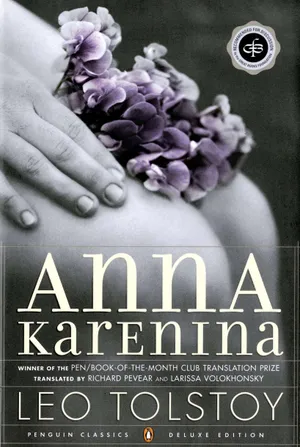
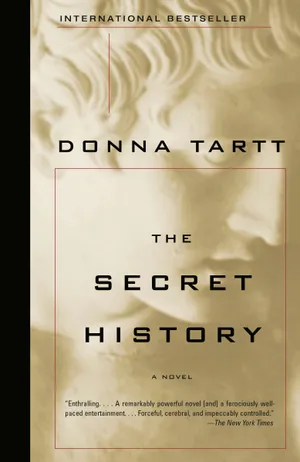
Ready to read Crime and Punishment?
Penguin Classics · 671 pages
Buy Crime and Punishment on Amazon