Our Review
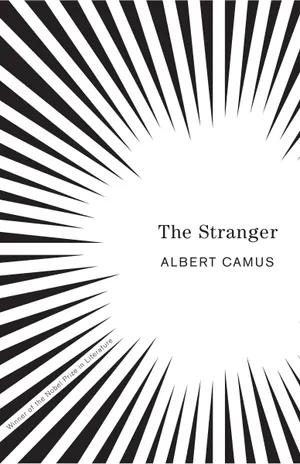
Albert Camus's "The Stranger" is one of the shortest, most unsettling, and most philosophically loaded novels ever written. In sparse, almost affectless prose, it tells the story of Meursault, a French Algerian clerk who, in the novel's opening line, learns that his mother has died — "Mother died today. Or maybe yesterday; I can't be sure" — and responds with a detachment that shocks everyone around him. He attends the funeral without crying. He begins a casual relationship the next day. He goes to the beach with acquaintances. And then, in a scene of extraordinary tension, he shoots and kills an Arab man on a sun-drenched Algerian beach, for reasons he cannot — or will not — explain.
The second half of the novel follows Meursault's trial, where it becomes clear that he is being condemned not for murder but for his refusal to perform the emotions that society demands. He did not cry at his mother's funeral. He does not express remorse. He will not pretend to believe in God. His prosecutors treat these failures of social performance as evidence of monstrousness, and the novel forces us to ask: Is Meursault a monster, or is he simply a man who refuses to lie?
Camus's prose — brilliantly translated by various hands — is a marvel of compression. Every sentence is stripped to its essentials, mirroring Meursault's refusal to embellish or pretend. The effect is hypnotic and deeply disturbing. You finish the novel in an afternoon and spend weeks turning it over in your mind.
Why This Book Earned Its Place in the Top 100
"The Stranger" earns its place on this list because it distilled an entire philosophical movement into 120 devastating pages and, in doing so, changed the way a generation thought about meaning, morality, and the absurdity of human existence. Camus's concept of the absurd — the collision between humanity's desire for meaning and the universe's stubborn refusal to provide any — finds its purest fictional expression in Meursault, a man who has simply stopped pretending that life makes sense.
The novel was published in 1942, during the German occupation of France, and its sense of meaninglessness was not merely philosophical but historical. Camus had watched European civilization tear itself apart twice in his lifetime, and Meursault's blank gaze at a world devoid of purpose reflected the experience of millions. The novel became a foundational text of existentialism — though Camus himself rejected the label — and influenced every writer who has since tried to capture the experience of alienation, from Vonnegut to Murakami.
But "The Stranger" endures not because of its philosophy but because of its artistry. Camus was a supreme stylist, and his ability to create an entire moral crisis in a novel shorter than many short stories is a testament to the power of literary economy. The novel proves that a great book does not need length — it needs precision, honesty, and the courage to follow its ideas to their most uncomfortable conclusions.
Who Should Read This Book
- •Readers interested in existentialist philosophy — this is the most accessible and powerful fictional introduction to the ideas of the absurd.
- •Anyone who appreciates spare, precise prose — Camus strips language to its bare bones, creating an effect that is both clinically detached and emotionally devastating.
- •People who enjoy novels that challenge conventional morality — Meursault forces you to question whether the emotions society demands of us are genuine or merely performed.
- •Fans of short, intense literary fiction — at barely 120 pages, this novel delivers more intellectual and emotional impact than books five times its length.
- •Readers grappling with questions of meaning — the novel does not offer answers, but it asks the questions with a clarity that can be genuinely liberating.
Key Themes and Takeaways
- The absurdity of existence
- Meursault embodies Camus's central philosophical insight: that life has no inherent meaning, and the honest response is to face that emptiness without flinching.
- Society's demand for conformity
- Meursault is condemned not for his crime but for his refusal to perform the grief, remorse, and religiosity that his society requires.
- Authenticity versus social performance
- The novel asks whether it is more moral to feel nothing and admit it or to feel nothing and pretend otherwise — and society's answer is deeply unsettling.
- The indifference of the universe
- The sun, the sea, the heat — the natural world in the novel is not hostile but utterly indifferent to human affairs, reflecting Camus's vision of a purposeless cosmos.
- Colonialism and otherness
- The murdered Arab man is never named, and this erasure has generated crucial postcolonial readings that interrogate the novel's racial politics and the violence of French Algeria.
Cultural and Historical Impact
"The Stranger" was published in 1942 and immediately established Camus as one of the leading voices of French literature and philosophy. It was central to his receiving the Nobel Prize in Literature in 1957 — at age 44, one of the youngest laureates ever. The novel has sold millions of copies worldwide and has been translated into dozens of languages. It is one of the most widely assigned texts in university philosophy and literature courses globally. The Cure's song "Killing an Arab" (1979) was directly inspired by the novel, and its influence can be traced through writers as diverse as Joan Didion, Bret Easton Ellis, and Haruki Murakami. Kamel Daoud's 2013 novel "The Meursault Investigation," which retells the story from the perspective of the murdered Arab man's brother, became an international bestseller and reopened important discussions about colonialism and erasure in Camus's work. The novel remains a touchstone for any discussion of existentialism, absurdism, and the relationship between the individual and society.
Notable Quotes
“Mother died today. Or maybe yesterday; I can't be sure.”
“I opened myself to the gentle indifference of the world.”
“Since we're all going to die, it's obvious that when and how don't matter.”
If You Loved The Stranger, Read These Next
Ready to read The Stranger?
Vintage International · 123 pages
Buy The Stranger on Amazon