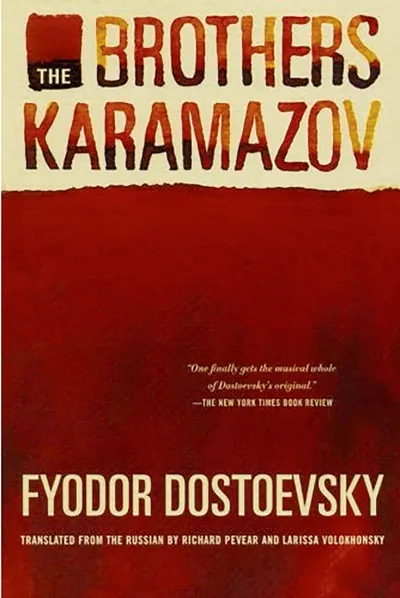
Our Review
Fyodor Dostoevsky's "The Brothers Karamazov" is frequently called the greatest novel ever written, and while such claims are always debatable, it is difficult to name another work of fiction that contains so much — so much passion, so much philosophy, so much psychological insight, so much sheer narrative power — within a single binding. Published in 1880, the year before Dostoevsky's death, it represents the culmination of everything he had been building toward across his entire career.
The novel tells the story of the Karamazov family: Fyodor Pavlovich, a repulsive, lecherous old man, and his three legitimate sons — Dmitri, the passionate sensualist; Ivan, the tortured intellectual; and Alyosha, the gentle spiritual seeker. When the father is murdered, suspicion falls on Dmitri, and the ensuing investigation and trial become the framework for Dostoevsky's exploration of the deepest questions a human being can ask: Does God exist? If God does not exist, is everything permitted? Can we love our neighbor? Can we forgive the unforgivable?
The novel contains multitudes. The "Grand Inquisitor" chapter, in which Ivan tells Alyosha a parable about Christ returning to earth during the Spanish Inquisition, is one of the most famous passages in all of literature — a self-contained masterpiece of philosophical fiction. Yet the novel is also a gripping murder mystery, a family drama of Shakespearean intensity, and a love story — several love stories, in fact — of overwhelming emotional force.
Why This Book Earned Its Place in the Top 100
"The Brothers Karamazov" earns its place on this list because it represents the novel form at its most ambitious and its most fully realized. No other work of fiction attempts to grapple simultaneously with murder, theology, psychology, family dynamics, courtroom drama, and the fundamental question of how to live — and no other novel succeeds so magnificently on every front.
Dostoevsky's achievement here is not merely intellectual. While the philosophical debates between Ivan and Alyosha have generated centuries of scholarly commentary, the novel's greatest strength is its emotional immediacy. Dmitri's helpless passion, Ivan's anguished doubt, Alyosha's quiet faith, even old Fyodor Pavlovich's grotesque vitality — these are not mouthpieces for ideas but fully alive human beings, contradictory and compelling in the way only the greatest fictional characters can be.
The novel also matters because of its influence. Freud called it "the most magnificent novel ever written." It profoundly shaped existentialist philosophy — Sartre and Camus both wrestled with its arguments. Its narrative techniques influenced modernist fiction, and its exploration of the unconscious anticipated psychoanalysis by decades. To read it is not just to encounter a great novel but to encounter the foundations of modern thought about faith, freedom, and moral responsibility.
Who Should Read This Book
- •Readers who want to experience the novel form at its most powerful — if you could only read one novel in your life, a strong case can be made that it should be this one.
- •Anyone wrestling with questions of faith and doubt — Dostoevsky's treatment of these themes is the most honest and rigorous in all of fiction.
- •Fans of family sagas and psychological drama — the Karamazov family dynamics are as compelling as any in literature, blending love, resentment, and rivalry.
- •Philosophy enthusiasts — the 'Grand Inquisitor' chapter alone is worth the price of admission, a standalone work of philosophical genius.
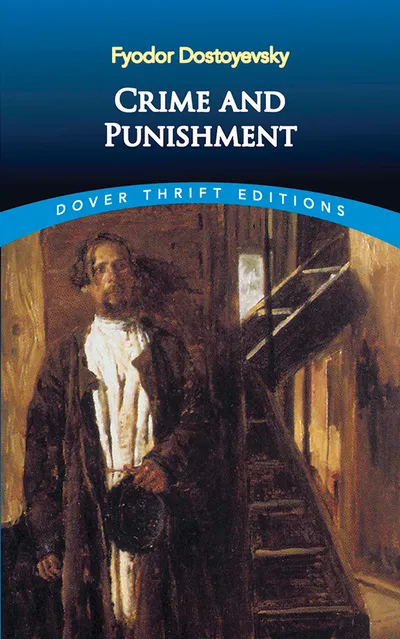
- •Readers who loved 'Crime and Punishment' and want to see Dostoevsky's vision at full scale — this is the masterwork the earlier novel was a rehearsal for.
Key Themes and Takeaways
- Faith versus doubt
- The novel's central tension lies between Alyosha's quiet faith and Ivan's brilliant, anguished atheism, and Dostoevsky does not settle the argument cheaply.
- The problem of evil
- Ivan's rebellion against God is grounded in the suffering of innocent children — a challenge to theology that remains unanswered two centuries later.
- Free will and moral responsibility
- If God does not exist, is everything permitted? The novel explores this question not abstractly but through the consequences of the characters' choices.
- The complexity of family bonds
- The Karamazovs embody the full spectrum of family life — love, hatred, rivalry, loyalty, and the inescapable fact that we are shaped by those we did not choose.
- Passion versus reason
- Dmitri's sensual abandon and Ivan's cerebral torment represent two inadequate responses to life; Alyosha's compassion suggests a third way.
- Redemption and forgiveness
- Even amid murder and depravity, the novel holds open the possibility that love and forgiveness can transform even the most damaged soul.
Cultural and Historical Impact
"The Brothers Karamazov" was published as a serial in 1879-1880 and was an immediate critical and commercial success in Russia, solidifying Dostoevsky's reputation as one of the greatest writers who ever lived. Sigmund Freud wrote an influential essay on the novel, calling it "the most magnificent novel ever written," and the "Grand Inquisitor" chapter has been analyzed by theologians, philosophers, and literary critics for nearly a century and a half. The novel profoundly influenced existentialist philosophy — both Sartre and Camus drew heavily on its ideas. It has been adapted into numerous films, including a notable 1958 Hollywood version starring Yul Brynner, as well as stage productions and operas. Albert Einstein reportedly said that Dostoevsky "gives me more than any scientist, more than Gauss." The novel remains a cornerstone of university curricula in literature, philosophy, and theology worldwide.
Notable Quotes
“The mystery of human existence lies not in just staying alive, but in finding something to live for.”
“Above all, don't lie to yourself. The man who lies to himself and listens to his own lie comes to a point that he cannot distinguish the truth within him.”
“I think the devil doesn't exist, but man has created him, he has created him in his own image and likeness.”
If You Loved The Brothers Karamazov, Read These Next

Ready to read The Brothers Karamazov?
Farrar, Straus and Giroux · 796 pages
Buy The Brothers Karamazov on Amazon