
Our Review
Norwegian Wood is Murakami's most atypical novel — and his most emotionally direct. There are no talking cats, no parallel dimensions, no surreal set pieces. Instead, there is Toru Watanabe, looking back from middle age on a period in the late 1960s when he was a university student in Tokyo, caught between two women and haunted by a death he could not prevent.
Toru's best friend Kizuki kills himself at seventeen, without warning or explanation. In the aftermath, Toru drifts toward Naoko, Kizuki's girlfriend, and they develop a relationship steeped in shared grief that neither of them fully understands. Naoko is beautiful, fragile, and progressively unraveling. When she retreats to a sanatorium in the mountains, Toru visits and writes letters, trying to hold on. Meanwhile, Midori — brash, funny, alive in a way that Naoko is not — enters his life and offers him something that looks dangerously like happiness.
The novel is about what it means to be young and surrounded by death. Murakami captures the specific loneliness of being twenty — old enough to understand loss, too young to know how to survive it. The prose is quiet and precise, the emotional landscape rendered with the clarity of a photograph taken in winter light. Every reader who has ever loved someone they could not save will recognize this book as their own.
Why This Book Earned Its Place in the Top 100
Norwegian Wood is the novel that made Murakami a literary superstar in Japan and eventually the world. It sold over four million copies in Japan alone upon its release — a phenomenon that made Murakami so uncomfortable he fled the country. The book endures because it captures something universal: the way that grief and desire coexist in youth, and the way that certain losses reshape us permanently.
What sets Norwegian Wood apart from other coming-of-age novels is its refusal to prettify suffering. Naoko's mental illness is not romanticized. Kizuki's suicide is not given meaning. The sanatorium scenes are some of the most quietly devastating in modern fiction — places where damaged people try to heal, and some of them do not. Murakami treats this with absolute respect.
The novel also succeeds as a love story because it presents an impossible choice with total honesty. Naoko represents the past, loyalty, and the gravitational pull of grief. Midori represents the future, vitality, and the terrifying possibility of moving on. That Murakami refuses to make this choice easy — or even clearly right — is what elevates the novel from romance to literature.
Who Should Read This Book
- •Anyone new to Murakami who wants to start with his most accessible work — Norwegian Wood is the gateway before the surreal masterpieces.
- •Readers in their twenties working through loss — this novel understands the specific ache of being young and bereaved better than almost anything else written.
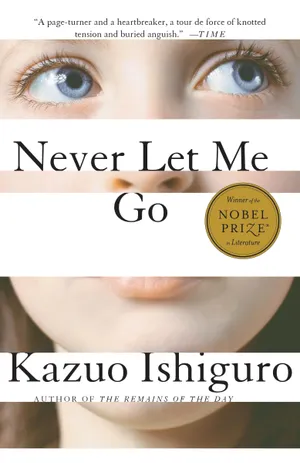
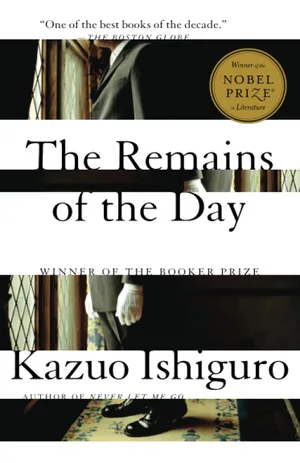
- •Fans of quiet, emotionally precise literary fiction — if you loved Never Let Me Go or The Remains of the Day, this novel shares their restrained devastation.
- •People who think they don't like Murakami's surrealism — this is the proof that his emotional intelligence exists independent of his fantastical elements.
Key Themes and Takeaways
- Grief and survival
- The novel asks how we go on living when the people we love do not, and whether moving forward is a betrayal of the dead.
- Mental illness without romanticization
- Naoko's deterioration is rendered with compassion but without the false glamour that fiction often applies to suffering.
- Youth and impermanence
- Murakami captures the terrible intensity of being young — when everything feels permanent and nothing actually is.
- The past versus the future
- Toru's choice between Naoko and Midori embodies the universal tension between loyalty to what was and openness to what might be.
- Loneliness in a crowd
- Set amid the student protests of 1960s Tokyo, the novel shows characters who are profoundly isolated despite being surrounded by people.
Cultural and Historical Impact
Published in 1987, Norwegian Wood sold over 4 million copies in Japan alone, transforming Murakami into a literary celebrity of a magnitude rarely seen for serious fiction. The novel has been translated into 36 languages and introduced Murakami to an international audience that would eventually make him a perennial Nobel Prize contender. A 2010 film adaptation directed by Tran Anh Hung brought the story to global cinema audiences. The book's title, taken from the Beatles song, has become so associated with the novel that many readers encounter the song through Murakami rather than the other way around. Norwegian Wood remains one of the bestselling literary novels in Japanese history and a defining text of late-twentieth-century Asian literature.
Notable Quotes
“If you only read the books that everyone else is reading, you can only think what everyone else is thinking.”
“What happens when people open their hearts? They get better.”
“Death exists, not as the opposite but as a part of life.”
If You Loved Norwegian Wood, Read These Next

Ready to read Norwegian Wood?
Vintage International · 296 pages
Buy Norwegian Wood on Amazon