Our Review
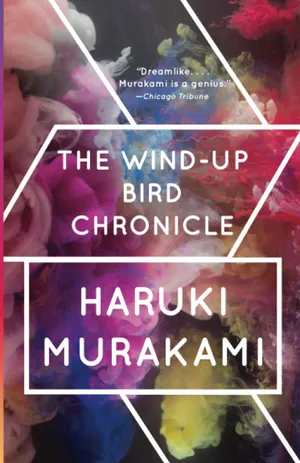
Haruki Murakami's The Wind-Up Bird Chronicle begins with a man boiling spaghetti and answering a phone call from a woman he doesn't know. It sounds mundane. It is the last mundane moment in the book.
Toru Okada is an unemployed, mild-mannered man living in a Tokyo suburb. His cat has disappeared. Then his wife, Kumiko, disappears too. Toru's search for them leads him into an increasingly surreal landscape: a psychic prostitute, a clairvoyant teenage girl, a mysterious well in an abandoned yard, a pair of enigmatic sisters, and — most disturbingly — the wartime history of the Japanese occupation of Manchuria, told through some of the most harrowing war passages in modern fiction.
Murakami has often been called the Japanese Kafka, and this novel is the best justification for that comparison. The everyday and the dreamlike coexist without explanation. Toru descends into a dry well and sits in absolute darkness for days. He enters a hotel room that may or may not exist. He confronts his wife's brother, Noboru Wataya, a rising politician who may be a force of genuine evil — or simply a narcissist.
The Wind-Up Bird Chronicle does not resolve in the way a Western novel might. Its mysteries are not all solved. Its symbols — the wind-up bird whose cry foretells suffering, the mark that appears on Toru's cheek — resist tidy interpretation. But this is Murakami's point: some experiences are real precisely because they cannot be explained. The novel asks you to trust the feeling of the story rather than the logic, and if you can make that leap, the result is unlike anything else in fiction.
Why This Book Earned Its Place in the Top 100
The Wind-Up Bird Chronicle earns its place because it is Murakami's most ambitious and most rewarding novel — the one where his signature blend of the mundane and the metaphysical reaches its fullest expression. All of Murakami's themes are here: loneliness, loss, the violence hidden beneath the surface of modern life, the strange wells and passageways that connect the everyday to something darker and deeper. But in this novel, they achieve a scale and an intensity that his shorter, simpler works only approximate.
The novel also earns its place for the Manchurian war chapters, which are among the most powerful depictions of wartime atrocity in literature. Murakami weaves these historical horrors into his surreal domestic narrative without warning, and the effect is devastating — suggesting that Japan's buried war guilt seeps into the present like contaminated groundwater, poisoning everything it touches.
Few novelists working today command the range that Murakami displays here. He moves from domestic comedy to war horror to philosophical meditation to dreamlike surrealism within a single chapter, and the transitions feel not jarring but inevitable. The Wind-Up Bird Chronicle is proof that fiction can do things that no other form — not film, not nonfiction, not philosophy — can replicate.
Who Should Read This Book
- •Fans of surreal fiction — this is the pinnacle of Murakami's achievement, where his dreamlike style serves its deepest purpose.
- •Readers interested in Japanese history — the Manchurian war chapters are essential reading and are unlike anything in Murakami's other work.
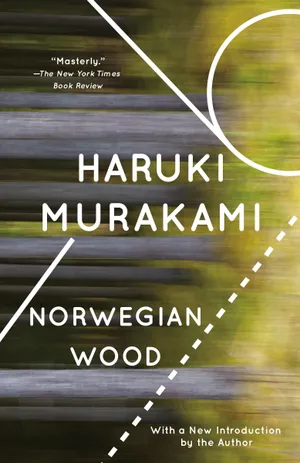
- •Anyone who enjoyed Norwegian Wood — this is the darker, stranger, more ambitious Murakami, and it will change your understanding of what he is capable of.
- •Readers comfortable with ambiguity — the novel does not explain itself, and that is a feature, not a flaw.
- •Lovers of immersive reading experiences — at over 600 pages, the novel creates a world you inhabit rather than merely visit.
Key Themes and Takeaways
- The violence beneath the surface
- Suburban domesticity conceals histories of brutality, both personal and national, and the novel insists on dragging them into the light.
- Japan's buried war history
- The Manchurian chapters suggest that unacknowledged atrocities from World War II continue to contaminate Japanese society.
- The unconscious mind
- Wells, darkness, and dream passages represent descents into the psyche, where the answers that daylight cannot provide may be found.
- Evil and emptiness
- Noboru Wataya represents a kind of evil that is not passionate but hollow — the void at the center of power without conscience.
- Identity and dissolution
- Toru's journey gradually strips away the familiar markers of his identity, raising the question of what remains when everything external is removed.
Cultural and Historical Impact
Originally published in Japanese in three volumes between 1994 and 1995, The Wind-Up Bird Chronicle was translated into English by Jay Rubin in 1997. It cemented Murakami's reputation as a major world novelist and is frequently cited as his masterwork. The novel helped establish Murakami as a perennial contender for the Nobel Prize in Literature. It has been translated into more than 50 languages and has sold millions of copies worldwide. The novel's influence can be seen in the work of writers from David Mitchell to Kazuo Ishiguro. Murakami's exploration of Japan's Manchurian history in a fictional context helped bring a suppressed chapter of the war to international attention.
Notable Quotes
“I was always hungry for love. Just once, I wanted to know what it was like to get my fill of it -- to be fed so much love I couldn't take any more.”
“Memories and thoughts aged, just as people did. But certain thoughts could never age, and certain memories would never fade.”
“Is it possible, in the final analysis, for one human being to achieve perfect understanding of another? We can invest enormous time and energy in serious efforts to know another person, but in the end, how close can we come to that person's essence?”
If You Loved The Wind-Up Bird Chronicle, Read These Next


Ready to read The Wind-Up Bird Chronicle?
Vintage International · 607 pages
Buy The Wind-Up Bird Chronicle on Amazon