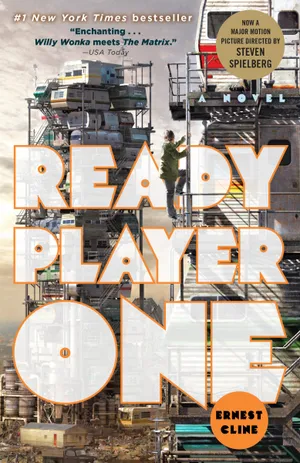
Our Review
The year is 2045, and the real world is a disaster — climate change, economic collapse, energy crises. Most of humanity escapes into the OASIS, a vast virtual reality universe created by the late James Halliday, a reclusive genius obsessed with 1980s pop culture. When Halliday died, he left behind a challenge: hidden somewhere in the OASIS are three keys and three gates, and whoever finds them inherits his fortune and control of the OASIS itself.
Wade Watts is an impoverished teenager living in the "stacks" — a vertical trailer park in Oklahoma City — who has devoted his life to studying Halliday's obsessions: Atari games, John Hughes movies, Rush albums, Dungeons & Dragons modules. When Wade becomes the first person to find the Copper Key, he's catapulted from obscurity into a high-stakes treasure hunt where his competitors include his best friend (whom he's never met in person), a legendary Japanese duo, a badass female avatar named Art3mis, and an evil corporation willing to kill in the real world to win in the virtual one.
Ernest Cline's debut is a full-speed nostalgia trip powered by genuine affection for geek culture and a surprisingly effective thriller plot. The references come fast and constant — WarGames, Pac-Man, Monty Python, Blade Runner — but they serve the story rather than replacing it. Underneath the Easter eggs is a real narrative about loneliness, identity, and whether virtual connection can substitute for the messy, imperfect real thing.
Why This Book Earned Its Place in the Top 100
Ready Player One earns its place as the definitive novel of internet-age nostalgia culture. Cline captured something real about how a generation raised on screens, games, and pop culture processes the world — through references, shared knowledge, and communal fandom. The novel's central conceit — that deep knowledge of pop culture trivia could literally save the world — is wish fulfillment, but it's wish fulfillment that speaks to how millions of people actually feel about the media that shaped them.
The book also raises genuinely interesting questions about virtual reality, corporate control of digital spaces, and what happens when the virtual world becomes more appealing than the real one. Written in 2011, before the metaverse became a Silicon Valley buzzword, Cline's vision of a society that has largely abandoned physical reality for a digital one was prescient in ways that have only become more relevant.
Beyond its ideas, Ready Player One is simply one of the most purely entertaining novels of the 2010s. The treasure hunt structure provides relentless momentum, the puzzles are clever, and the underdog-versus-corporation plot delivers real stakes and real satisfaction. It's a book that makes you want to play one more level.
Who Should Read This Book
- •Children of the '80s and '90s — the nostalgia is dense, specific, and delivered with genuine love rather than cynical calculation.
- •Gamers and tech enthusiasts — the OASIS is one of the most fully realized virtual worlds in fiction, and its implications for VR and gaming are thoughtfully explored.
- •Readers who love treasure hunts and puzzles — the quest structure is irresistible, and the clues are genuinely clever.
- •Anyone interested in the future of virtual reality — Cline's vision of how VR could reshape society is surprisingly nuanced beneath the adventure.
- •People who want a fast, fun read with surprising depth — this is a page-turner that also makes you think about identity, escapism, and corporate power.
Key Themes and Takeaways
- Nostalgia and cultural memory
- The entire quest is built on the premise that pop culture knowledge constitutes a valid and valuable form of expertise.
- Virtual versus physical reality
- The novel asks whether relationships and experiences in virtual spaces are less real than their physical counterparts.
- Corporate control of digital spaces
- IOI's attempt to monetize and restrict the OASIS mirrors real debates about net neutrality and corporate power over the internet.
- Escapism and its costs
- The OASIS is both salvation and symptom — it keeps people sane but also keeps them from addressing the real world's problems.
- Identity and self-invention
- Avatars allow characters to present idealized versions of themselves, raising questions about authenticity and the selves we choose to show.
Cultural and Historical Impact
Published in 2011, Ready Player One became a New York Times bestseller and has sold millions of copies worldwide. Steven Spielberg directed the 2018 film adaptation, which grossed over $582 million worldwide — fittingly, given that Spielberg's own films feature prominently in the novel's references. The book became a touchstone of geek culture and helped popularize the concept of the "metaverse" years before Facebook rebranded as Meta. It is frequently cited in discussions about virtual reality, gaming culture, and digital economics. A sequel, Ready Player Two, was published in 2020. The novel's vision of corporate-controlled virtual spaces has become increasingly relevant as tech companies pursue VR and AR platforms.
Notable Quotes
“Going outside is highly overrated.”
“People who live in glass houses should shut the fuck up.”
“You'd be amazed how much research you can get done when you have no life whatsoever.”
If You Loved Ready Player One, Read These Next
Ready to read Ready Player One?
Crown Publishers · 374 pages
Buy Ready Player One on Amazon