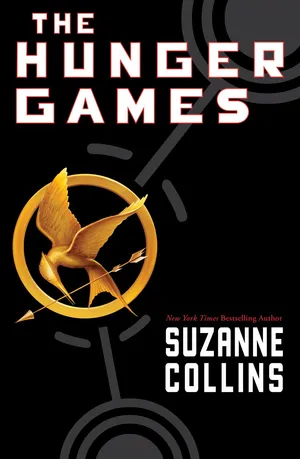
Our Review
In the ruins of what was once North America, the nation of Panem forces each of its twelve districts to send two teenagers — one boy, one girl — to compete in the annual Hunger Games, a televised death match that serves simultaneously as punishment for a past rebellion and entertainment for the Capitol's citizens. When twelve-year-old Primrose Everdeen's name is drawn, her older sister Katniss volunteers to take her place.
What follows is a survival narrative that operates on multiple levels. On the surface, it's a viscerally tense action story — Katniss must fight, hunt, form alliances, and kill to survive in an engineered arena while cameras broadcast every moment. But Collins, who worked in children's television before writing fiction, understands something crucial about media: the Games are not just about survival. They're about performance. Katniss must be entertaining. She must make the audience love her. And the gap between who she really is — a fierce, pragmatic hunter who hates being watched — and who she must perform for the cameras becomes the novel's deepest tension.
Suzanne Collins writes with the clarity and velocity of someone who respects her audience too much to waste a single sentence. The world-building is efficient and chilling, the first-person present-tense narration creates unbearable immediacy, and Katniss Everdeen — angry, suspicious, loyal, and deeply uncomfortable with her own emotions — is one of the great protagonists in young adult fiction.
Why This Book Earned Its Place in the Top 100
The Hunger Games earns its place by being the rare YA novel that functions as genuine political fiction. Collins based the concept on channel-surfing between reality TV and footage of the Iraq War and being unable to distinguish between them, and that origin story tells you everything about the novel's real subject. This is a book about how violence is packaged as entertainment, how the powerful use spectacle to maintain control, and how media shapes the stories we believe about ourselves and our world.
The novel also permanently altered the landscape of young adult fiction. Before The Hunger Games, YA dystopia existed but was niche. After it, the genre exploded — Divergent, The Maze Runner, The Giver film adaptation — and a generation of readers grew up thinking critically about power, surveillance, and rebellion because of this book. Katniss Everdeen became an icon of female strength in a way that transcended fiction; her three-finger salute was adopted by real-world protest movements in Thailand and other countries.
Collins achieved all this while writing a novel that is, on the most basic level, almost impossible to put down. The pacing is ruthless, the stakes are real, and the emotional cost of survival is never glossed over.
Who Should Read This Book
- •Young readers discovering dystopian fiction — this remains the best entry point into the genre, accessible enough for teenagers but substantive enough to spark genuine political thinking.
- •Adults who dismissed it as 'just a YA book' — the social commentary on media, class, and spectacle is sharper than most adult literary fiction on the same subjects.
- •Fans of survival stories — the arena sequences are brilliantly constructed, with each new threat raising the stakes without becoming gratuitous.
- •Readers interested in media criticism — Collins's examination of how reality TV, propaganda, and performance intersect is disturbingly prescient.
- •Anyone who wants a protagonist who earns her heroism — Katniss is not chosen or special; she volunteers out of love, and everything after is grit, intelligence, and refusal to be used.
Key Themes and Takeaways
- Violence as entertainment
- The Games are reality television taken to its logical extreme, and the novel forces readers to confront their own complicity as spectators.
- Class and economic exploitation
- The relationship between the Capitol and the Districts mirrors historical patterns of colonial extraction and wealth inequality.
- Performance and authenticity
- Katniss must perform a romance and a personality for cameras, raising questions about how media shapes and distorts identity.
- Sacrifice and survival
- The novel explores what people will do to protect those they love and what surviving at others' expense costs the survivor.
- Rebellion and resistance
- Katniss's small acts of defiance — choosing compassion where cruelty is expected — become the seeds of revolution.
Cultural and Historical Impact
Published in 2008, The Hunger Games has sold over 100 million copies worldwide across the trilogy and been translated into more than 50 languages. The four-film franchise (2012-2015) starring Jennifer Lawrence grossed nearly $3 billion worldwide and launched Lawrence into global stardom. Katniss's three-finger salute was adopted by pro-democracy protestors in Thailand, Myanmar, and Hong Kong, making it one of the rare fictional gestures to cross into real-world political resistance. The franchise revived interest in dystopian fiction across all age categories and influenced everything from YA publishing to Halloween costumes. A prequel novel, The Ballad of Songbirds and Snakes, was published in 2020 and adapted into a film in 2023.
Notable Quotes
“I volunteer! I volunteer as tribute!”
“Happy Hunger Games! And may the odds be ever in your favor.”
“Destroying things is much easier than making them.”
If You Loved The Hunger Games, Read These Next
Ready to read The Hunger Games?
Scholastic Press · 374 pages
Buy The Hunger Games on Amazon