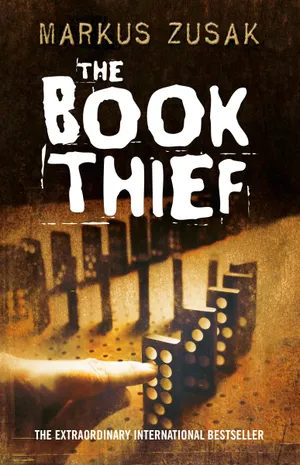
Our Review
The Book Thief is narrated by Death, and he is tired. He has been very busy in Nazi Germany. He tells you this upfront, along with what will happen to the main characters. He spoils his own story repeatedly, because Death does not deal in suspense — he deals in inevitability. Knowing the ending, Markus Zusak seems to say, does not diminish the story. It changes what you pay attention to.
Liesel Meminger is nine years old when she arrives on Himmel Street in the fictional town of Molching, outside Munich, to live with foster parents Hans and Rosa Hubermann. Her brother has just died on the train. Her mother, a communist, has surrendered her to save her life. Liesel cannot read, but she has stolen a book from her brother's graveside — the first of many thefts that give the novel its title.
Hans teaches Liesel to read in the basement, painting words on the walls. When the Hubermanns hide a Jewish man named Max in that same basement, words become Liesel's primary currency — the thing she trades, hoards, shares, and uses to survive. She reads during air raids. She reads to her neighbors in the bomb shelter. She reads to Max when he lies in a coma.
Zusak's great achievement is finding a new angle on the most documented atrocity in human history. By filtering the story through Death's weary omniscience and a child's hunger for words, he makes the familiar devastating all over again.
Why This Book Earned Its Place in the Top 100
The Book Thief earns its place because it accomplishes the nearly impossible: it tells a Holocaust story that feels original. After Schindler's List, after Night, after The Diary of Anne Frank, after thousands of memoirs and novels and films, Zusak found a perspective no one had tried — Death as narrator, a girl who steals books as protagonist — and used it to illuminate the period with startling freshness.
The novel's central argument is that words are the most powerful force in human history. Hitler used words to build the Third Reich. Liesel uses words to resist it — not through political action, but through the private, radical act of reading and sharing stories in a world that would prefer silence and obedience. That argument, rendered through Zusak's lyrical and sometimes experimental prose, gives the novel a depth that its young-adult classification might lead you to underestimate.
The Book Thief is also one of those rare novels that works equally well for teenagers and adults. Its emotional honesty is not simplified for younger readers — it is clarified. Death's voice, at once darkly comic and infinitely compassionate, is one of the most memorable narrative innovations of the twenty-first century.
Who Should Read This Book
- •Anyone who thinks they've read enough about World War II — Zusak's fresh perspective will prove otherwise, finding new angles on the most documented period in history.
- •Young adult readers ready for something substantial — this novel respects its audience's intelligence while never losing its accessibility.
- •Readers who love language and wordplay — the novel's central metaphor is the power of words, and Zusak practices what he preaches at the sentence level.
- •Book lovers — this is a novel about the act of reading itself, about why stories matter, and it will remind you why you fell in love with books in the first place.
Key Themes and Takeaways
- The power of words
- Words build Nazi ideology and words resist it — the novel argues that literacy is both humanity's greatest weapon and its greatest hope.
- Death and humanity
- Death's narration provides a cosmic perspective on human suffering while paradoxically deepening our empathy for individual lives.
- Kindness in extremity
- The Hubermanns' decision to hide Max is not heroic in any dramatic sense — it is simply decent, and that quiet decency becomes the novel's moral center.
- Childhood under totalitarianism
- Liesel's coming-of-age unfolds against a backdrop of propaganda, air raids, and casual cruelty, showing how children navigate a world designed by monstrous adults.
- Theft as resistance
- Liesel's book thefts are acts of defiance — small claims of agency in a world that has stripped her of almost everything.
Cultural and Historical Impact
Published in 2005, The Book Thief spent over 230 weeks on the New York Times bestseller list and has sold over 16 million copies worldwide. It was named one of the best books of the year by multiple publications and won numerous awards including the Michael L. Printz Honor Book designation. The novel was adapted into a 2013 film starring Geoffrey Rush and Emily Watson. It has become one of the most widely assigned novels in middle and high school English classes, often replacing or supplementing traditional Holocaust texts. The novel is credited with revitalizing interest in historical fiction for young adult audiences and demonstrating that YA literature could tackle the most serious subjects with literary sophistication.
Notable Quotes
“I have hated words and I have loved them, and I hope I have made them right.”
“I am haunted by humans.”
“The only thing worse than a boy who hates you: a boy that loves you.”
If You Loved The Book Thief, Read These Next
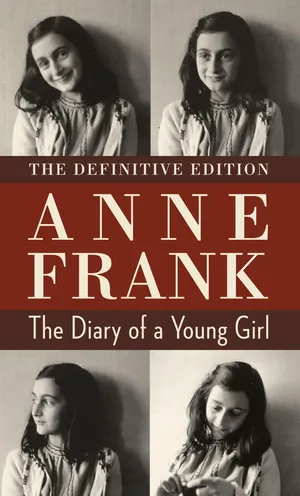
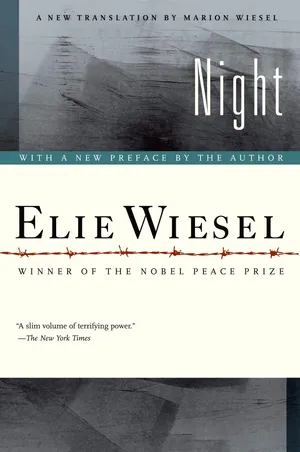
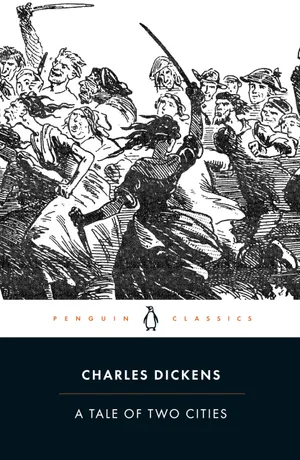
Ready to read The Book Thief?
Alfred A. Knopf · 552 pages
Buy The Book Thief on Amazon