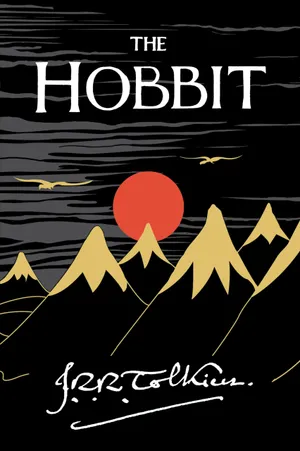
Our Review
J.R.R. Tolkien's "The Hobbit" begins with one of the most inviting opening lines in all of literature — "In a hole in the ground there lived a hobbit" — and what follows is a story so perfectly pitched, so warmly imagined, and so enduringly delightful that it has served as the gateway to fantasy literature for generations of readers. Bilbo Baggins is a thoroughly respectable, thoroughly comfortable hobbit who wants nothing more than a quiet life of good food and regular meals. That life is upended when the wizard Gandalf and a company of thirteen dwarves arrive at his door and sweep him off on an adventure to reclaim the Lonely Mountain and its treasure from the dragon Smaug.
What makes "The Hobbit" so special is not its plot, which follows a fairly conventional quest structure, but its voice. Tolkien narrates as if he were a particularly gifted uncle telling a bedtime story — conversational, wryly humorous, occasionally addressing the reader directly — and this warmth transforms what could be a standard adventure tale into something intimate and deeply human. Bilbo's reluctant heroism — his homesickness, his surprise at his own courage, his growing realization that he is capable of more than he ever imagined — is endlessly relatable.
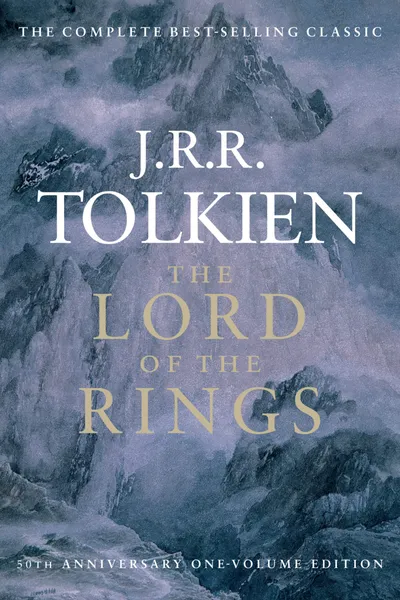
The novel also serves as the perfect introduction to Middle-earth, offering a lighter, more accessible doorway into the vast mythology that Tolkien would expand in "The Lord of the Rings." The riddle scene with Gollum, in which Bilbo discovers the One Ring, is one of the most perfectly constructed scenes in fantasy literature — tense, funny, and fateful in ways that the reader only fully appreciates later.
Why This Book Earned Its Place in the Top 100
"The Hobbit" earns its place on this list because it is, quite simply, one of the most perfectly realized adventure stories ever written, and because it opened the door to a literary tradition that has brought joy to hundreds of millions of readers. Before Tolkien, fantasy was a scattered, marginal genre. "The Hobbit" — published in 1937 and immediately embraced by both children and adults — demonstrated that fantasy could be sophisticated, emotionally rich, and taken seriously as literature.
The novel's genius lies in its deceptive simplicity. On the surface, it is a children's book about a small creature on a big adventure. But Tolkien, a scholar of Anglo-Saxon literature and Norse mythology, wove into this seemingly simple tale a profound meditation on courage, greed, hospitality, and the costs of war. The Battle of Five Armies, which closes the book, carries a moral weight that resonates with Tolkien's own experience as a soldier in World War I — the idea that glory in battle is a lie, and that the real heroes are those who come home to tend their gardens.
Bilbo Baggins is also one of literature's great protagonists: an ordinary person who discovers extraordinary reserves of courage, not through magic or destiny but through loyalty, kindness, and the simple refusal to abandon his friends. In a genre often dominated by chosen ones and prophesied heroes, Bilbo's ordinariness is itself radical and deeply hopeful.
Who Should Read This Book
- •Readers of all ages looking for a perfect adventure story — 'The Hobbit' is the rare book that works equally well for children and adults, with layers that deepen on every rereading.
- •Anyone who wants to start reading Tolkien — this is the ideal entry point into Middle-earth, lighter and more accessible than 'The Lord of the Rings' but just as lovingly crafted.
- •Parents looking for a book to read aloud to their children — Tolkien's narrative voice is warm, witty, and perfectly suited to being spoken.
- •Fantasy fans who want to understand the genre's origins — without 'The Hobbit,' modern fantasy as we know it simply would not exist.
Key Themes and Takeaways
- The courage of ordinary people
- Bilbo's heroism comes not from special powers but from his willingness to do the right thing despite his fear, making his bravery more meaningful than any warrior's.
- Home and the love of comfort
- Bilbo's longing for his armchair and his pantry is not weakness but a sign of what makes life worth living — and what makes leaving home to help others truly heroic.
- Greed and its destructive power
- The dragon Smaug's hoard and the Battle of Five Armies both illustrate how the lust for treasure corrupts individuals and nations alike.
- Growth through adversity
- Bilbo returns to the Shire fundamentally changed — wiser, braver, more empathetic — demonstrating that true adventures transform us from the inside.
- The value of mercy
- Bilbo's decision to spare Gollum — driven by pity rather than justice — becomes the most consequential moral choice in all of Middle-earth.
Cultural and Historical Impact
"The Hobbit" has sold over 100 million copies since its publication in 1937, making it one of the bestselling books of all time. It was a favorite of C.S. Lewis (who reviewed it enthusiastically) and W.H. Auden, helping to establish fantasy as a respectable literary form. Peter Jackson adapted it into a trilogy of films (2012-2014) that grossed nearly $3 billion worldwide, though the films were more divisive than his "Lord of the Rings" trilogy. The novel has been translated into over 50 languages and has been continuously in print for nearly nine decades. "The Hobbit" is credited with launching the modern fantasy genre and has directly inspired countless authors, game designers, and filmmakers. The Tolkien Society and the annual celebration of Hobbit Day (September 22, Bilbo's birthday) attest to the novel's enduring cultural presence. The riddle game between Bilbo and Gollum has become one of the most iconic scenes in all of fantasy literature.
Notable Quotes
“In a hole in the ground there lived a hobbit.”
“There is nothing like looking, if you want to find something. You certainly usually find something, if you look, but it is not always quite the something you were after.”
“It does not do to leave a live dragon out of your calculations, if you live near one.”
If You Loved The Hobbit, Read These Next
Ready to read The Hobbit?
Mariner Books · 300 pages
Buy The Hobbit on Amazon