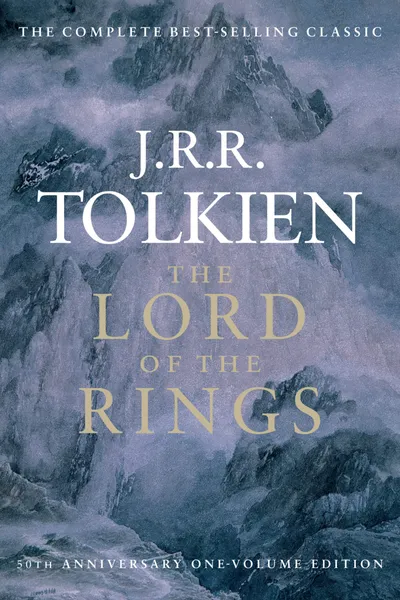
Our Review
J.R.R. Tolkien's "The Lord of the Rings" is the foundation stone of modern fantasy literature — and it is so much more than that. Conceived as a single novel and published in three volumes between 1954 and 1955, it follows the hobbit Frodo Baggins and his companions on a quest to destroy the One Ring, an artifact of terrible power created by the Dark Lord Sauron to dominate all of Middle-earth. The journey takes them from the idyllic Shire through increasingly dangerous and wondrous landscapes to the volcanic fires of Mount Doom in the heart of Mordor.
But to summarize the plot is to miss the point. What Tolkien created was not merely a story but an entire world — complete with its own languages, histories, mythologies, geographies, and peoples — rendered with a depth of detail and imaginative conviction that has never been matched. Middle-earth feels real because Tolkien, a philologist and medievalist, built it with the same scholarly rigor he brought to his academic work. The languages came first, then the cultures that spoke them, then the histories those cultures lived through. The story grew from the world, not the other way around.
The result is a novel that operates simultaneously as a thrilling adventure, an elegy for a vanishing past, a meditation on power and its corrupting influence, and a deeply felt exploration of friendship, sacrifice, and the courage of ordinary people in extraordinary circumstances. Tolkien's prose shifts effortlessly from the homey warmth of the Shire to the ancient grandeur of Gondor to the existential dread of Mordor, creating a tonal range that few novels in any genre can equal.
Why This Book Earned Its Place in the Top 100
"The Lord of the Rings" belongs on this list because it created, virtually single-handedly, the modern fantasy genre and in doing so gave millions of readers access to a form of storytelling — mythic, archetypal, unashamedly concerned with good and evil — that the literary establishment had largely abandoned. Before Tolkien, fantasy was a marginal genre. After Tolkien, it was one of the dominant modes of popular storytelling in the world.
But its importance transcends genre. Tolkien's meditation on power — the idea that the Ring corrupts everyone who uses it, that the only moral response to absolute power is to destroy it rather than wield it — is one of the twentieth century's most potent political metaphors, even though Tolkien himself resisted allegorical readings. The novel's insistence that the smallest, most overlooked people can change the course of history remains deeply moving and deeply subversive.
The prose itself, while sometimes dismissed by literary critics as old-fashioned, achieves an emotional power that few "literary" novelists can match. The charge of the Rohirrim, Sam carrying Frodo up Mount Doom, Gandalf's fall in Moria — these are moments that lodge themselves permanently in the reader's memory. Tolkien proved that myth-making and great literature are not opposites but natural allies.
Who Should Read This Book
- •Fantasy lovers who want to experience the genre at its origin and its peak — every epic fantasy since owes a direct debt to this novel.
- •Readers who love immersive world-building — Middle-earth is the most fully realized fictional world ever created, and losing yourself in it is one of reading's great pleasures.
- •Anyone who appreciates stories about ordinary courage — the hobbits' heroism lies not in strength or skill but in their stubborn refusal to give up, which makes it all the more moving.
- •People interested in mythology, language, and medieval literature — Tolkien drew on Norse sagas, Anglo-Saxon poetry, and Finnish mythology to create something wholly original.
- •Readers who have only seen the films — Peter Jackson's adaptations are magnificent, but the novels contain depths of characterization, language, and theme that no film can fully capture.
Key Themes and Takeaways
- The corrupting nature of power
- The One Ring is the novel's central symbol — a force that corrupts everyone who touches it, arguing that absolute power can never be used for good.
- The courage of the small
- Hobbits, the least powerful people in Middle-earth, prove to be its salvation, embodying Tolkien's belief that moral strength matters more than physical or political power.
- Loss and the passing of beauty
- Middle-earth is a world in decline — the Elves are leaving, the old forests are shrinking — and the novel is saturated with a bittersweet awareness that victory always comes at a cost.
- Friendship and fellowship
- The bonds between the members of the Fellowship — especially between Frodo and Sam — are the novel's emotional core, showing that love between friends can sustain people through impossible trials.
- Environmental destruction
- Saruman's industrial devastation of Isengard and the Shire anticipates modern environmentalism, reflecting Tolkien's deep grief at the industrialization of the English countryside.
- Death and immortality
- Tolkien explores mortality as a gift rather than a curse, contrasting the Elves' immortal weariness with the mortal urgency that gives human (and hobbit) life its meaning.
Cultural and Historical Impact
"The Lord of the Rings" has sold over 150 million copies, making it one of the bestselling novels ever written. It has been translated into at least 38 languages. Peter Jackson's film trilogy (2001-2003) grossed nearly $3 billion worldwide and won 17 Academy Awards, including Best Picture for "The Return of the King." Amazon's "The Rings of Power" television series (2022-present) was one of the most expensive productions in television history. The novel essentially created the modern fantasy genre — without it, there would be no "Game of Thrones," no "Wheel of Time," no Dungeons & Dragons. Tolkien's invented languages, particularly Elvish (Quenya and Sindarin), have been studied and expanded by devoted fans for decades. In multiple reader polls, including the BBC's "Big Read" in 2003, "The Lord of the Rings" has been voted the greatest book of the twentieth century.
Notable Quotes
“Not all those who wander are lost.”
“I wish it need not have happened in my time,' said Frodo. 'So do I,' said Gandalf, 'and so do all who live to see such times. But that is not for them to decide. All we have to decide is what to do with the time that is given us.'”
“Even the smallest person can change the course of the future.”
If You Loved The Lord of the Rings, Read These Next
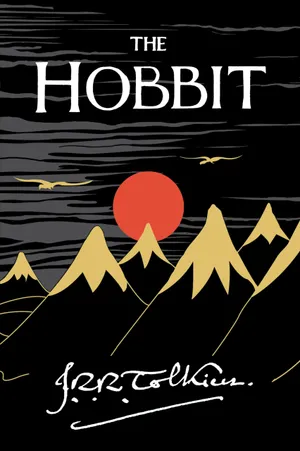
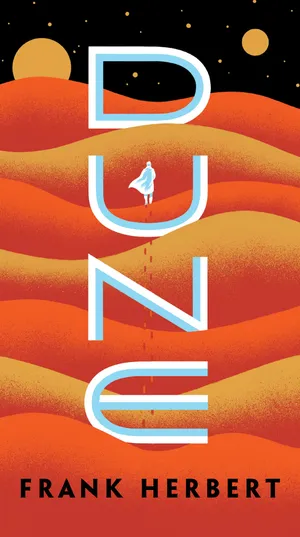
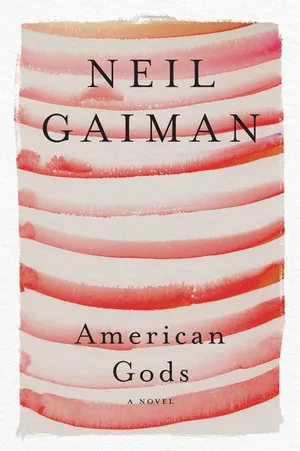
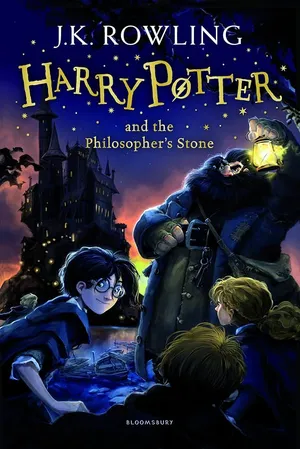
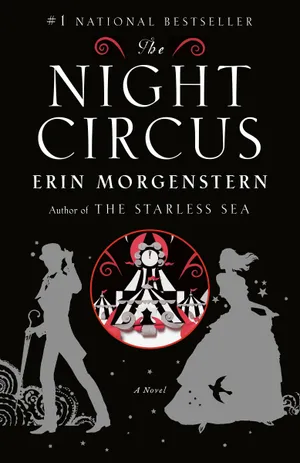
Ready to read The Lord of the Rings?
Mariner Books · 1178 pages
Buy The Lord of the Rings on Amazon