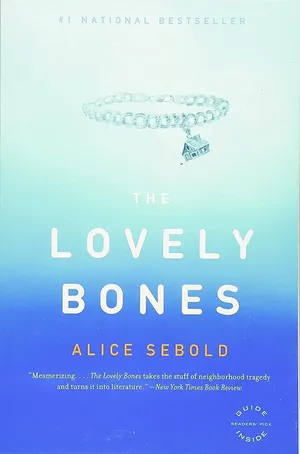
Our Review
"My name was Salmon, like the fish; first name, Susie. I was fourteen when I was murdered on December 6, 1973." With that opening, Alice Sebold establishes the central fact and the central impossibility of The Lovely Bones: the narrator is dead. Susie Salmon has been raped and murdered by a neighbor, and she tells her story from a personalized heaven, watching her family, her killer, and her friends navigate the aftermath of her death.
Published in 2002, the novel is a sustained act of narrative daring. Sebold gives us a murdered girl who cannot intervene, cannot bring her killer to justice, and cannot comfort the people she loves. All she can do is watch. And what she watches is the slow, agonizing process by which a family either heals or falls apart in the wake of unspeakable violence. Her father becomes obsessed with finding the killer. Her mother retreats into an affair and then into absence. Her sister grows up carrying a weight no teenager should bear. Her younger brother barely remembers her.
The genius of the novel is that heaven — Susie's heaven, with its high school campus and perpetual good weather — is not really about the afterlife. It is about longing. Susie watches the living world with the desperate hunger of someone who has been locked outside her own life. The book transforms a crime novel into a meditation on grief, memory, and the terrible, beautiful persistence of love after death. It is not a comfortable book, but it is a deeply compassionate one.
Why This Book Earned Its Place in the Top 100
The Lovely Bones earns its place because it found a way to write about the most painful subject imaginable — the murder of a child — with honesty, tenderness, and genuine literary ambition. Sebold does not exploit Susie's death for shock value. She uses it as the starting point for an exploration of grief that is at once intimate and universal. Every reader knows the experience of losing someone. Few books capture the specific quality of that loss — the way the dead person remains present in memory while the world moves on without them — as precisely as this one does.
The novel also matters for its narrative innovation. The dead narrator is an old literary device, but Sebold makes it feel new by committing fully to its implications. Susie cannot change anything. She can only observe and yearn. That constraint — the impossibility of intervention — gives the novel its particular emotional texture: a combination of tenderness and frustration that mirrors the experience of grief itself. You want to reach through the page and fix things, and you cannot, and that inability is the point. The Lovely Bones turned an experimental premise into a bestselling phenomenon, proving that millions of readers were hungry for fiction that took both emotional truth and narrative invention seriously.
Who Should Read This Book
- •Anyone who has experienced the loss of a loved one — Sebold captures the texture of grief with extraordinary precision, and many readers have found genuine comfort in the book.
- •Readers who appreciate inventive narrative structures — the dead narrator is handled with subtlety and emotional intelligence rather than as a gimmick.
- •Parents — the novel explores the particular devastation of losing a child and the different ways family members process catastrophic grief.
- •Fans of literary fiction that is also a page-turner — the mystery of whether Susie's killer will be caught provides genuine suspense alongside the deeper emotional themes.
- •Anyone interested in how fiction processes trauma — Sebold, who is herself a survivor of sexual assault, brings hard-won authority to the subject.
Key Themes and Takeaways
- Grief and its aftermath
- The novel traces how each member of the Salmon family processes Susie's murder differently, and how grief can both destroy and ultimately transform a family.
- The persistence of the dead
- Susie remains present — watching, longing, unable to let go — and her continued existence reflects the way the dead live on in the minds of those who loved them.
- Innocence and violence
- The murder of a fourteen-year-old girl represents the ultimate violation of innocence, and the novel refuses to look away from its consequences.
- Justice and its absence
- The killer is known to the reader from the beginning; the question is not whodunit but whether justice will come, and the answer is far from simple.
- The bonds of family
- The 'lovely bones' of the title are the connections that grow between people in the wake of loss — fragile, imperfect, but real.
- Growing up and moving on
- Susie watches her peers grow into adulthood while she remains forever fourteen, raising painful questions about the lives unlived.
Cultural and Historical Impact
The Lovely Bones was published in 2002 and became one of the bestselling novels of the decade, spending over a year on the New York Times bestseller list and selling more than 10 million copies worldwide. It was the #1 bestselling novel in the United States in 2003. The book was adapted into a feature film in 2009, directed by Peter Jackson and starring Saoirse Ronan, Mark Wahlberg, and Stanley Tucci, who received an Academy Award nomination for his portrayal of the killer. The novel was selected as a Today Show Book Club pick and became a global publishing phenomenon, translated into more than 40 languages. It opened mainstream literary conversation about sexual violence and grief, and influenced a wave of novels told from unconventional narrative perspectives. Sebold's earlier memoir, Lucky, about her own rape, gained renewed attention as a result of the novel's success.
Notable Quotes
“My name was Salmon, like the fish; first name, Susie. I was fourteen when I was murdered on December 6, 1973.”
“These were the lovely bones that had grown around my absence: the connections — sometimes tenuous, sometimes made at great cost, but often magnificent — that happened after I was gone.”
“You don't notice the dead leaving when they really choose to leave you. You're not meant to.”
If You Loved The Lovely Bones, Read These Next
Ready to read The Lovely Bones?
Back Bay Books · 328 pages
Buy The Lovely Bones on Amazon