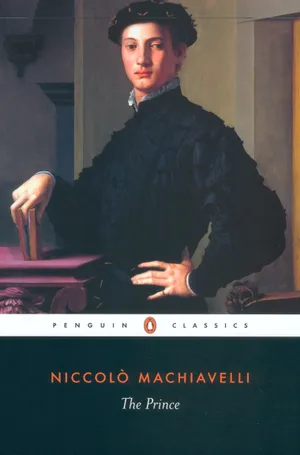
Our Review
The Prince is the most misunderstood book in political philosophy. Written in 1513 by Niccolò Machiavelli — a Florentine diplomat who had been tortured and exiled after a political coup — it is a short, blunt manual on how to acquire and maintain political power. The word "Machiavellian" has become synonymous with cunning and amorality. But reading the actual text reveals something far more interesting than simple villainy.
Machiavelli's innovation was to describe political reality as it is rather than as it should be. Previous political philosophers — Plato, Cicero, Thomas Aquinas — wrote about ideal states and virtuous rulers. Machiavelli looked at the princes he had actually dealt with and asked: what works? The answer was often ugly. A prince must sometimes be cruel to maintain order. He must be willing to break promises when circumstances change. He should be feared rather than loved, if he cannot be both.
But Machiavelli was not celebrating cruelty. He was diagnosing the brutal mechanics of power in a world where Italian city-states were constantly invaded, betrayed, and torn apart by faction. His advice is coldly practical because the alternative — idealistic naivety — got people killed. The Prince is less a celebration of evil than a field guide to survival, written by a man who had seen what happens when leaders mistake good intentions for good governance.
Why This Book Earned Its Place in the Top 100
The Prince created modern political science. Before Machiavelli, political philosophy was a branch of ethics — the question was always "what should a ruler do to be virtuous?" Machiavelli asked a different question: "what must a ruler do to survive?" That shift — from ought to is, from morality to mechanics — opened up an entirely new way of analyzing power that leads directly to Hobbes, Locke, and every political realist since.
The book also endures because its central tension has never been resolved. Is it ever justified to do wrong in service of a greater good? Can a leader maintain moral purity while making the compromises that governance demands? These are not abstract questions — they confront every president, every CEO, every person who holds power over others. Machiavelli forces you to confront the gap between how you wish the world worked and how it actually does. That uncomfortable honesty is why the book has been continuously read, debated, banned, and praised for over five hundred years.
Who Should Read This Book
- •Anyone interested in politics or leadership — Machiavelli's analysis of power dynamics remains the sharpest ever written, and modern politics is far more comprehensible after reading it.
- •Readers who think they know what 'Machiavellian' means — the actual book is far more nuanced, sympathetic, and morally complex than the caricature suggests.
- •History enthusiasts — The Prince is also a vivid portrait of Renaissance Italy, packed with examples from ancient Rome and contemporary Italian politics.
- •Business professionals navigating organizational politics — Machiavelli's insights about managing rivals, building alliances, and projecting strength apply directly to corporate environments.
Key Themes and Takeaways
- The mechanics of power
- Machiavelli analyzes how power is actually acquired, maintained, and lost — not how it ideally should be wielded.
- Virtù and fortuna
- Success depends on the interplay between a leader's skill and energy (virtù) and the unpredictable forces of fate (fortuna).
- Appearance versus reality
- A prince must appear merciful, faithful, and religious — whether or not he actually is — because perception governs politics.
- The ethics of leadership
- Sometimes a ruler must do what is conventionally immoral to protect the state and its people from greater harm.
- Fear versus love
- It is better to be feared than loved, if you cannot be both — because fear is more reliable than affection.
- Political realism
- Idealism in politics is dangerous; effective governance requires seeing the world as it is, not as you wish it were.
Cultural and Historical Impact
The Prince was published posthumously in 1532 and was placed on the Catholic Church's Index of Forbidden Books in 1559, where it remained for centuries. Despite — or because of — this condemnation, it became one of the most widely read political texts in history. Shakespeare used Machiavelli as a model for villains like Richard III and Iago. The Founding Fathers, including John Adams and Thomas Jefferson, read and debated The Prince. Napoleon annotated his personal copy. Mussolini wrote a preface for a 1924 edition. The word "Machiavellian" entered English in the 16th century and remains in common use. The book has been translated into every major language and continues to be assigned in political science courses worldwide. Tupac Shakur adopted "Makaveli" as a stage name, bringing Machiavelli to an entirely new audience.
Notable Quotes
“Everyone sees what you appear to be, few experience what you really are.”
“It is much safer to be feared than loved, when, of the two, either must be dispensed with.”
“The lion cannot protect himself from traps, and the fox cannot defend himself from wolves. One must therefore be a fox to recognize traps, and a lion to frighten wolves.”
If You Loved The Prince, Read These Next
Ready to read The Prince?
Penguin Classics · 144 pages
Buy The Prince on Amazon