Our Review
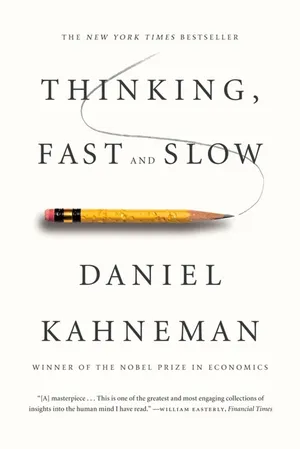
Daniel Kahneman spent decades studying the systematic errors of the human mind, and Thinking, Fast and Slow is his attempt to give the rest of us the map. The book's central framework is deceptively simple: your brain operates in two modes. System 1 is fast, automatic, and intuitive — it recognizes faces, finishes sentences, and flinches at danger without conscious effort. System 2 is slow, deliberate, and analytical — it solves math problems, weighs evidence, and makes careful decisions. The trouble is that System 1 is in charge far more often than you think, and its shortcuts — while usually efficient — produce predictable, systematic errors.
Kahneman walks you through these errors with the calm precision of a scientist who has spent forty years documenting them. You will learn about anchoring (why the first number you see skews all subsequent judgments), the availability heuristic (why vivid, recent events distort your sense of probability), loss aversion (why losing $100 hurts about twice as much as gaining $100 feels good), and dozens of other cognitive biases that shape your decisions about money, health, relationships, and risk every single day.
This is not a self-help book. Kahneman is honest enough to tell you that knowing about these biases does not reliably prevent you from falling for them. What the book offers is something more valuable: a vocabulary for understanding your own irrationality. Once you learn to see System 1 in action, you cannot unsee it — in yourself, in others, in institutions, in markets.
Why This Book Earned Its Place in the Top 100
Thinking, Fast and Slow earned Kahneman a place on this list because it is the single most important book about how the human mind actually works — as opposed to how we flatter ourselves that it works. Kahneman won the Nobel Prize in Economics in 2002 (he is a psychologist, not an economist, which tells you something about how disruptive his ideas were) for demonstrating that human beings are not the rational agents that economic theory assumed.
This book is the summation of that life's work, co-developed with his late collaborator Amos Tversky. It is rigorous — every claim is backed by experimental evidence — and it is accessible, written with a storyteller's instinct for the example that makes the abstract concrete.
The book matters because the biases Kahneman describes are not quirks. They are the operating system of the human mind, and they affect every domain of life: medicine (doctors misjudge probabilities), law (judges give harsher sentences before lunch), finance (investors chase losses and fear gains), and politics (voters are more persuaded by stories than statistics). Understanding these patterns will not make you rational, but it will make you humble — and humility about one's own thinking is one of the most valuable intellectual qualities a person can develop.
Who Should Read This Book
- •Anyone who makes decisions — which is everyone. Kahneman's insights about cognitive bias apply to every domain of human life, from investing to parenting.
- •Business leaders and managers — understanding how bias affects judgment, negotiation, and organizational decision-making is essential for effective leadership.
- •Students of psychology, economics, and behavioral science — this is the foundational text, written by the man who created the field.
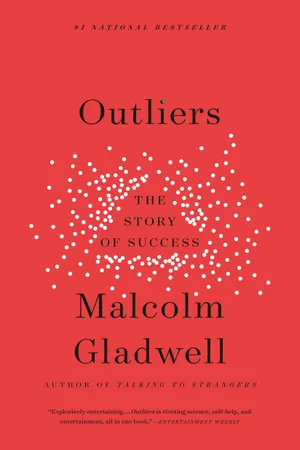
- •Readers who enjoyed Outliers or Freakonomics — Kahneman goes deeper into the cognitive machinery that those books describe from the outside.
- •Anyone who wants to understand why smart people make predictable mistakes — this is the most comprehensive and authoritative guide available.
Key Themes and Takeaways
- System 1 and System 2
- The two-system framework — fast intuition versus slow deliberation — provides a powerful vocabulary for understanding how and why we think the way we do.
- Cognitive bias as architecture, not error
- Kahneman shows that biases are not random mistakes but predictable features of the mind's design, hardwired by evolution.
- Loss aversion and prospect theory
- We feel losses roughly twice as intensely as equivalent gains, a discovery that revolutionized economics and decision science.
- Overconfidence and the illusion of understanding
- We consistently overestimate our ability to predict and understand complex events, substituting coherent stories for genuine knowledge.
- The experiencing self versus the remembering self
- Kahneman distinguishes between the self that lives through an experience and the self that remembers it, showing they often reach very different conclusions about happiness.
Cultural and Historical Impact
Published in 2011, Thinking, Fast and Slow was a global bestseller, selling over 2 million copies and translated into more than 40 languages. It won the National Academy of Sciences Best Book Award and was named one of the best books of the year by the New York Times, the Economist, and the Wall Street Journal. The book brought behavioral economics into mainstream public awareness and is now standard reading in business schools, medical schools, law schools, and policy programs worldwide. Kahneman and Tversky's concepts — anchoring, loss aversion, the availability heuristic — have become standard vocabulary in fields from finance to healthcare. The book influenced public policy through the "nudge" movement, which uses behavioral insights to design better decision environments. Kahneman, who passed away in 2024, is remembered as one of the most influential social scientists of the twentieth century.
Notable Quotes
“A reliable way to make people believe in falsehoods is frequent repetition, because familiarity is not easily distinguished from truth.”
“Nothing in life is as important as you think it is while you are thinking about it.”
“We can be blind to the obvious, and we are also blind to our blindness.”
If You Loved Thinking, Fast and Slow, Read These Next
Ready to read Thinking, Fast and Slow?
Farrar, Straus and Giroux · 499 pages
Buy Thinking, Fast and Slow on Amazon