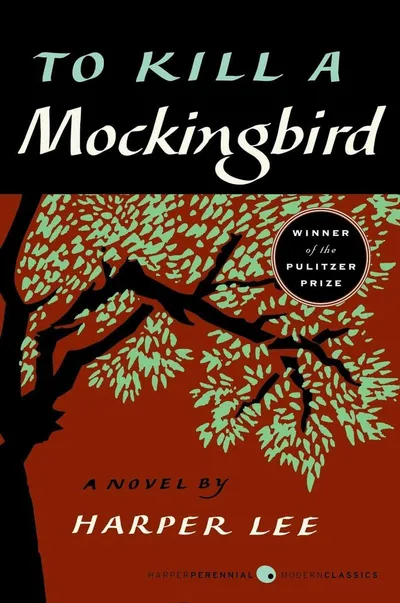
Our Review
Harper Lee's "To Kill a Mockingbird" is one of those rare novels that manages to be both a perfectly crafted coming-of-age story and a searing indictment of racial injustice in America — all told through the eyes of a six-year-old girl named Scout Finch. Set in the fictional town of Maycomb, Alabama during the 1930s, the novel follows Scout, her brother Jem, and their friend Dill as they become fascinated with their reclusive neighbor Boo Radley, while their father Atticus — a lawyer of unshakable moral conviction — agrees to defend Tom Robinson, a Black man falsely accused of raping a white woman.
What makes this novel endure is Lee's extraordinary ability to channel a child's voice without ever dumbing down the material. Scout's innocence becomes the lens through which we see the ugliness of prejudice, the complexity of class, and the quiet heroism of standing up for what is right when the entire community tells you to sit down. The courtroom scenes crackle with tension, but it is the quieter moments — Scout standing on Boo's porch, finally seeing the world from his perspective — that deliver the novel's most devastating emotional punch. This is a book about empathy as a radical act, and it has lost none of its power.
Why This Book Earned Its Place in the Top 100
"To Kill a Mockingbird" holds the top spot on this list because no other American novel has so effectively translated the abstract concept of moral courage into a story that a twelve-year-old and a seventy-year-old can both feel in their bones. Published in 1960, right as the Civil Rights Movement was reaching its crescendo, the novel gave millions of white Americans a way to confront the racism embedded in their own communities. Atticus Finch became, for better or worse, the template for what a just person looks like — someone who does the right thing not because it is popular, but because it is right.
Beyond its social impact, the novel is simply a masterwork of narrative craft. Lee's prose is warm without being sentimental, sharp without being cruel. The structure — weaving the Boo Radley mystery with the Tom Robinson trial — is elegant and purposeful, showing how fear of the "other" operates at every level of society. It remains the most widely taught novel in American schools, and for good reason: it asks the most important question literature can ask — can we learn to see the world through someone else's eyes?
Who Should Read This Book
- •Young readers encountering serious literature for the first time — this is the perfect gateway into novels that deal with weighty themes without sacrificing storytelling pleasure.
- •Anyone interested in American history and race relations — Lee's portrait of the Depression-era South is both specific and universal in its exploration of systemic injustice.
- •Parents looking for a book to read alongside their children — the novel opens up conversations about fairness, empathy, and courage that are essential at any age.
- •Readers who love character-driven fiction — Atticus, Scout, Jem, Calpurnia, and Boo Radley are among the most indelible characters in American literature.
- •Legal professionals and aspiring lawyers — the courtroom sequences remain some of the most compelling fictional depictions of the justice system ever written.
Key Themes and Takeaways
- Racial injustice
- The novel exposes how deeply embedded racism warps the legal system, social structures, and individual lives in the American South.
- Moral courage
- Atticus Finch embodies the idea that true bravery is standing by your principles when the world is against you.
- Loss of innocence
- Scout and Jem's gradual understanding of the cruelty around them mirrors every child's painful awakening to the imperfections of the adult world.
- Empathy and perspective
- The novel's central moral lesson — climbing into someone else's skin and walking around in it — is both its simplest and most radical idea.
- Class and social hierarchy
- Maycomb's rigid class system, from the Finches to the Ewells to the Cunninghams, reveals how poverty and privilege shape moral behavior.
- The coexistence of good and evil
- Lee refuses to divide the world into heroes and villains, showing instead how decency and cruelty can exist side by side in the same community.
Cultural and Historical Impact
"To Kill a Mockingbird" has sold over 45 million copies worldwide and has been translated into more than 40 languages. It won the Pulitzer Prize for Fiction in 1961. The 1962 film adaptation, starring Gregory Peck as Atticus Finch, won three Academy Awards, and Peck's performance is routinely cited as one of the greatest in cinema history. The American Film Institute named Atticus Finch the greatest movie hero of the 20th century. The novel has been a staple of American school curricula for over six decades, though it has also faced frequent challenges and bans — both from those who object to its racial language and from those who argue it centers a white savior narrative. Harper Lee famously never published another novel during her lifetime (until the controversial "Go Set a Watchman" in 2015), making "Mockingbird" one of the most remarkable one-book literary legacies in history.
Notable Quotes
“You never really understand a person until you consider things from his point of view... Until you climb inside of his skin and walk around in it.”
“The one thing that doesn't abide by majority rule is a person's conscience.”
“People generally see what they look for, and hear what they listen for.”
If You Loved To Kill a Mockingbird, Read These Next
Ready to read To Kill a Mockingbird?
Harper Perennial Modern Classics · 336 pages
Buy To Kill a Mockingbird on Amazon